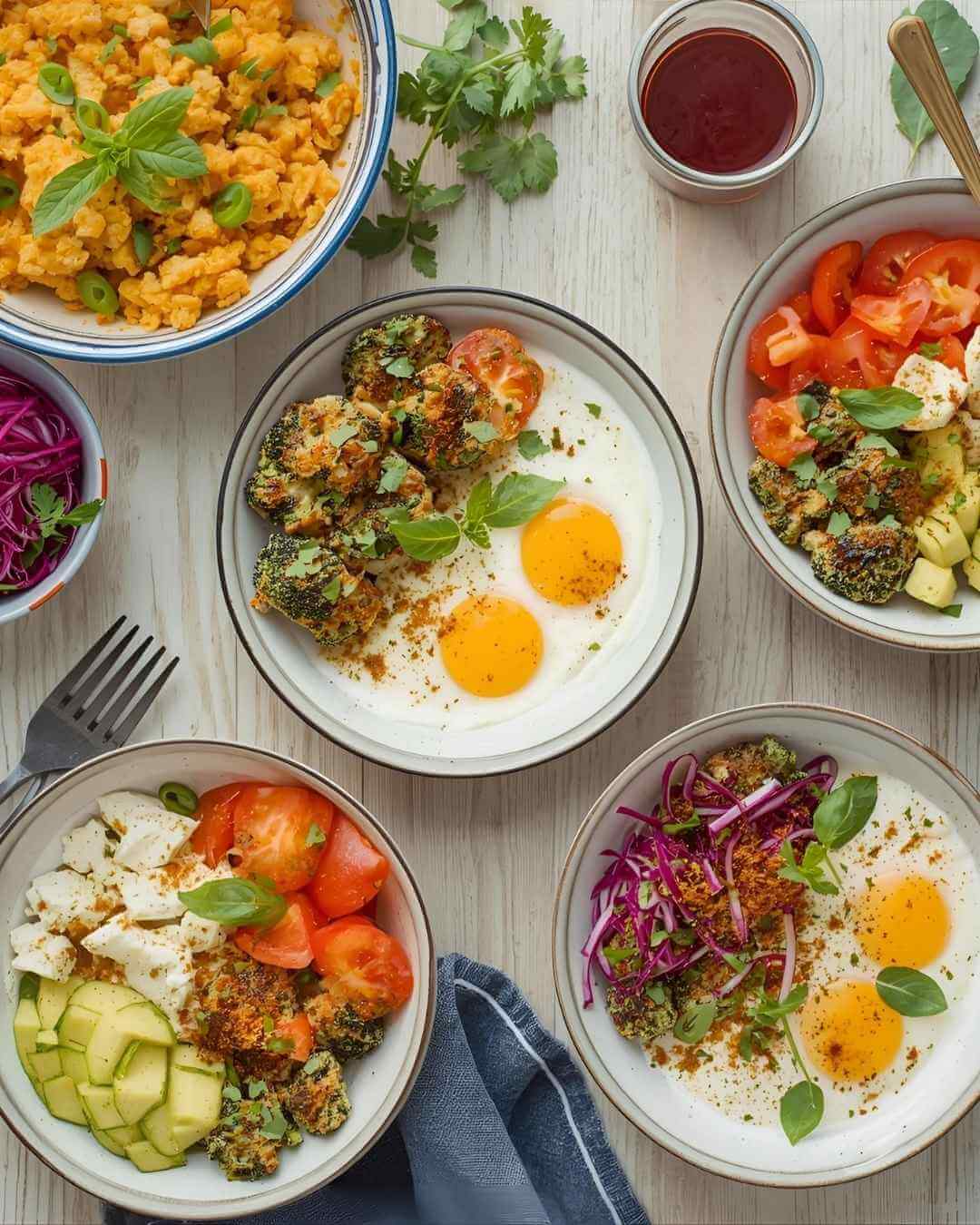
15 Easy Keto Mediterranean Breakfast Ideas for Busy Mornings (5-15 Minutes)
I used to think “healthy breakfast” meant either spending an hour in the kitchen or choking down something that tasted like cardboard.
Then came the morning chaos.
It was 6:47 AM on a Tuesday, and I was standing in my kitchen in my bathrobe, staring at the refrigerator with absolutely no idea what to eat. My inbox already had 14 emails. And I had a client call in 43 minutes.
I grabbed a banana and ran.
By 10 AM, I was shaking, irritable, and desperately searching my desk drawer for anything edible. By noon, my brain fog was so bad I had to reread the same paragraph four times. By 3 PM, I was ready to rage-quit my entire life.
That banana? It set me up for complete hormonal disaster.
The blood sugar spike. The insulin surge. The crash. The cortisol compensating. The cycle of cravings, energy crashes, and brain fog that would haunt me all day.
I knew I needed to eat better. I just didn’t know how to make it work with my actual life.
That was before I discovered that Mediterranean cultures have been doing “quick, healthy breakfast” for centuries—and it translates perfectly to keto.
No complicated recipes. No expensive ingredients. No hour-long meal prep sessions at 5 AM.
Just real food that keeps you satisfied, energized, and mentally sharp until lunch. Food that supports your hormones instead of sabotaging them. Food that actually tastes like something you’d want to eat.
In this guide, I’m sharing 15 keto Mediterranean breakfast ideas that range from 5 to 15 minutes of prep time. Some require zero cooking. Others are worth the extra few minutes because they’re that good.
Here’s what you’ll find:
- 5 no-cook breakfasts (perfect for rushed mornings)
- 5 minimal-cooking options (10 minutes or less)
- 5 slightly longer recipes (15 minutes—worth it for weekends or meal prep)
- Complete ingredients, macros, and tips for every recipe
- Make-ahead strategies so you can grab and go
- Shopping list essentials
- Customization options for different dietary needs
Every single recipe keeps you under 30g net carbs for the day (most are 5-10g per meal), features authentic Mediterranean ingredients, and supports hormone balance—especially important for women over 35.
Ready to transform your mornings? Let’s start with the fastest options and work our way up.
Want the Complete 5-Day Meal Plan?
Download your free Brain & Hormones Reset with recipes, shopping list, and supplement guide.
Get My Free Meal Plan →What Makes a Breakfast “Keto Mediterranean”?
Before we dive into recipes, let’s get clear on what we’re actually doing here.
Keto Mediterranean isn’t just “Mediterranean food without carbs.” It’s a intentional combination of two powerful nutritional approaches:
From Keto:
- Keep net carbs under 30g daily (most breakfasts: 5-10g)
- Prioritize healthy fats (70-75% of calories)
- Moderate protein (20-25% of calories)
- Shift your body from burning sugar to burning fat
From Mediterranean:
- Extra virgin olive oil (not butter or vegetable oils)
- Fresh herbs (oregano, rosemary, thyme, parsley, dill, mint)
- Colorful vegetables
- Quality protein (eggs, fish, full-fat Greek yogurt)
- Authentic spices (za’atar, sumac, cumin, paprika)
Why This Combination Works:
When I first started eating this way, I was skeptical. I’d been told for years that breakfast needed to be oatmeal or whole wheat toast or fruit smoothies. “Heart-healthy” they said.
My heart wasn’t healthy. My hormones weren’t balanced. My brain was a fog machine.
Switching to keto Mediterranean breakfasts changed everything:
- No more 10 AM crashes (stable blood sugar = stable energy)
- Mental clarity by 9 AM (your brain runs beautifully on ketones and healthy fats)
- Actually full until lunch (fat and protein trigger satiety hormones that carbs don’t)
- Reduced inflammation (olive oil and herbs are powerfully anti-inflammatory)
- Hormone support (your body needs dietary fat to make hormones—this is biology, not opinion)
What You WON’T Find in These Recipes:
- ❌ Bread, grains, or “keto bread” products
- ❌ Processed “keto” bars or shakes
- ❌ Sugar or artificial sweeteners (except minimal amounts in a couple recipes)
- ❌ Vegetable oils (corn, canola, soybean)
- ❌ Complicated ingredient lists
What You WILL Find:
- ✅ Real food
- ✅ Simple preparations
- ✅ Authentic Mediterranean flavors
- ✅ Ingredients you can pronounce
- ✅ Meals that keep you satisfied for 4-5 hours
Want to understand how this supports your hormones? I wrote a complete guide on how keto Mediterranean eating naturally balances insulin, cortisol, thyroid, and sex hormones—especially for women over 35. Read the hormone balance guide here.
Now let’s get to the recipes.
5-Minute Breakfasts (No Cooking Required)
These are your lifesavers for the mornings when you’re running late, didn’t prep anything, and need something right now.
No stove. No oven. Sometimes not even a bowl.
Breakfast #1: Greek Yogurt Power Bowl
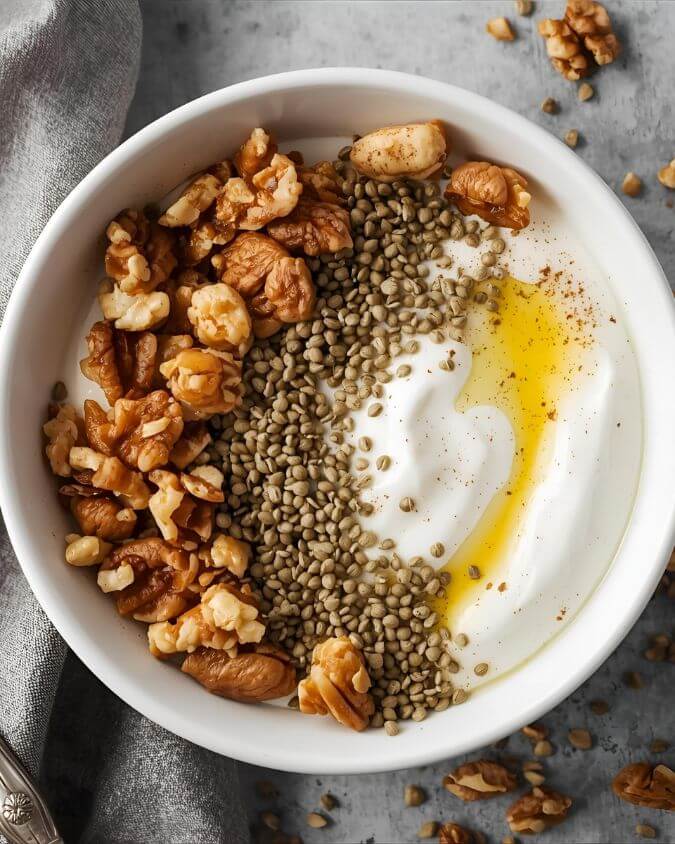
The Setup: Full-fat Greek yogurt topped with walnuts, hemp hearts, a drizzle of olive oil, and a sprinkle of cinnamon.
I know what you’re thinking. “Olive oil? On yogurt? That’s weird.”
I thought the same thing until I tried it in Athens. My friend’s grandmother served yogurt drizzled with local olive oil and honey (I skip the honey) for breakfast. The richness of the oil mixed with the tang of the yogurt was revelation-level good.
Why It Works:
- Probiotic-rich Greek yogurt supports gut health (and your gut health directly impacts hormone balance)
- High protein (20g+) keeps you satisfied
- Omega-3s from walnuts and hemp hearts support brain function and reduce inflammation
- Cinnamon helps regulate blood sugar
- Olive oil adds authentic Mediterranean flavor and heart-healthy fats
Ingredients:
- 1 cup (240g) full-fat plain Greek yogurt
- 2 tablespoons walnuts, chopped
- 1 tablespoon hemp hearts
- 1 teaspoon extra virgin olive oil
- ½ teaspoon ground cinnamon
- Optional: 5-6 blueberries if carbs allow (adds 2g net carbs)
Macros:
- Calories: 380
- Protein: 23g
- Fat: 28g
- Net Carbs: 8g
How to Make It:
- Scoop yogurt into a bowl
- Sprinkle walnuts and hemp hearts on top
- Drizzle with olive oil
- Dust with cinnamon
- Eat immediately
Pro Tips:
- Use Greek yogurt brands with 5g or fewer carbs per cup (I use Fage Total or Chobani Whole Milk)
- The olive oil should be your best quality—this is where it shines
- Prep small containers of walnuts and hemp hearts on Sunday for grab-and-go
- If you tolerate dairy poorly, use full-fat coconut yogurt instead
Make-Ahead Option: Portion yogurt into mason jars on Sunday. Keep toppings separate in small containers. Assemble in 30 seconds each morning.
Personal Note: This was the first breakfast that made me realize I could have something delicious and stay in ketosis. The olive oil seemed strange at first, but now I can’t imagine yogurt without it.
Breakfast #2: Mediterranean Avocado Plate
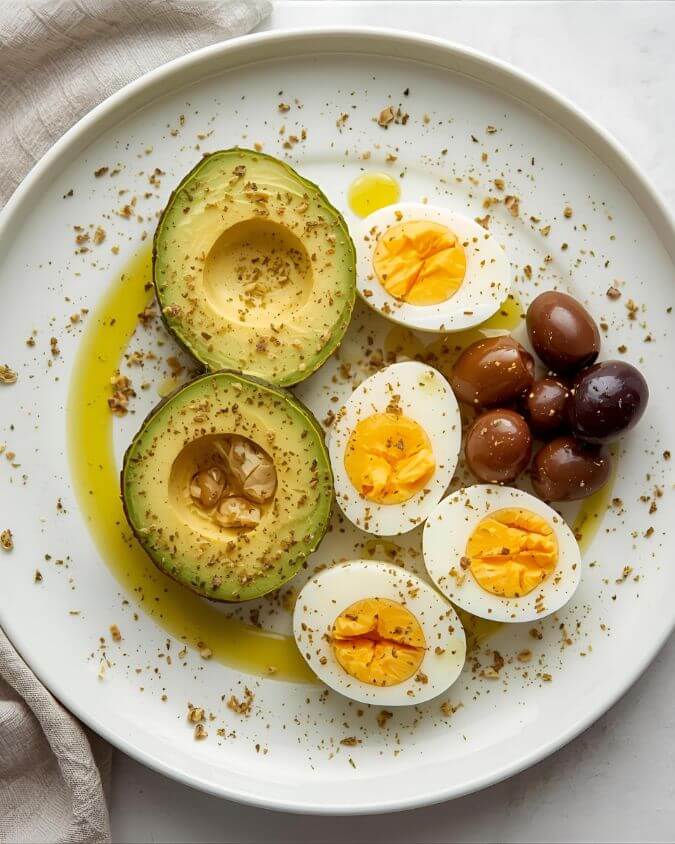
The Setup: Sliced avocado drizzled with olive oil, sprinkled with za’atar, served with hard-boiled eggs and olives.
This is how Greeks and Turks eat breakfast. No fuss. No cooking (if you pre-boil eggs). Just simple, perfect ingredients arranged on a plate.
The first time I visited my mother-in-law in Athens, she served me breakfast like this. I was expecting… I don’t know, something more elaborate? She laughed at my face. “We save the cooking for dinner,” she said. “Breakfast is simple.”
Why It Works:
- Avocado provides satisfying fats and fiber
- Hard-boiled eggs are protein powerhouses (and portable!)
- Olives add authentic Mediterranean flavor and healthy fats
- Za’atar (a Middle Eastern spice blend) is aromatic and contains antioxidants
- Zero cooking if eggs are pre-made
Ingredients:
- 1 medium avocado, sliced
- 2 hard-boiled eggs, peeled and halved
- 1 tablespoon extra virgin olive oil
- 1 teaspoon za’atar spice blend
- 10 Kalamata olives
- Pinch of flaky sea salt
- Optional: cucumber slices, cherry tomatoes, handful of arugula
Macros:
- Calories: 420
- Protein: 14g
- Fat: 38g
- Net Carbs: 6g
How to Make It:
- Slice avocado onto a plate
- Arrange eggs and olives beside it
- Drizzle everything with olive oil
- Sprinkle za’atar over avocado
- Add a pinch of flaky salt
- Add cucumber or tomatoes if desired
- Eat with a fork (or your hands, Mediterranean style)
Pro Tips:
- Boil a dozen eggs on Sunday—they last a week refrigerated
- Za’atar is a blend of thyme, sesame seeds, and sumac (find it at Middle Eastern markets or Amazon)
- Squeeze lemon over avocado to prevent browning if packing for later
- If you can find it, use Greek olives from a Mediterranean market—the flavor is incomparable
Make-Ahead Option: Pack everything in a container the night before except the avocado. Slice avocado fresh in the morning (takes 30 seconds).
Personal Note: This breakfast taught me that “quick” doesn’t mean “boring.” When ingredients are high-quality, you don’t need to do much to them.
Breakfast #3: Smoked Salmon Cucumber Bites
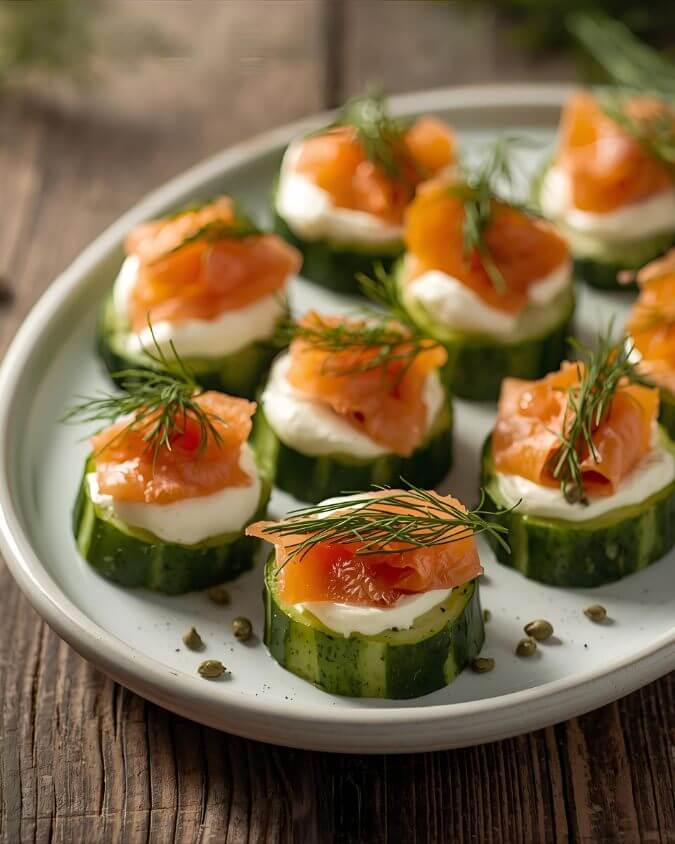
The Setup: Thick cucumber slices topped with cream cheese, smoked salmon, capers, and fresh dill.
This looks fancy enough for brunch entertaining but takes literally 5 minutes to make. It’s my secret weapon when I want to feel like I have my life together.
Why It Works:
- Omega-3 rich salmon supports brain health and reduces inflammation
- Cucumber is hydrating and provides crunch
- Refreshing and light (perfect for hot mornings)
- High protein, low carb, satisfying
- Restaurant-quality presentation
Ingredients:
- ½ English cucumber, sliced into thick rounds (about 12 slices)
- 3 ounces smoked salmon
- 2-3 tablespoons cream cheese or mascarpone
- 1 teaspoon capers
- Fresh dill sprigs
- Lemon wedge
- Freshly ground black pepper
Macros:
- Calories: 240
- Protein: 20g
- Fat: 16g
- Net Carbs: 4g
How to Make It:
- Slice cucumber into thick rounds (½ inch)
- Spread a thin layer of cream cheese on each round
- Top with a piece of smoked salmon (fold it artfully)
- Add a few capers on top
- Place a small dill sprig on each
- Arrange on a plate
- Squeeze lemon over everything
- Grind fresh black pepper on top
Pro Tips:
- Use wild-caught salmon for best omega-3 content (check the label)
- English cucumbers have fewer seeds and thinner skin
- This also makes an elegant appetizer for guests
- Add everything bagel seasoning instead of capers for variety
- If you’re dairy-free, skip the cream cheese—salmon + cucumber + lemon is delicious on its own
Make-Ahead Option: Assemble these the night before, cover tightly with plastic wrap, refrigerate. They’ll stay fresh until morning.
Personal Note: I make these when I’m feeling overwhelmed and need a win. Something about the presentation makes me feel like I’m taking care of myself, even on chaotic mornings.
Breakfast #4: Quick Breakfast Plate (Mezze Style)
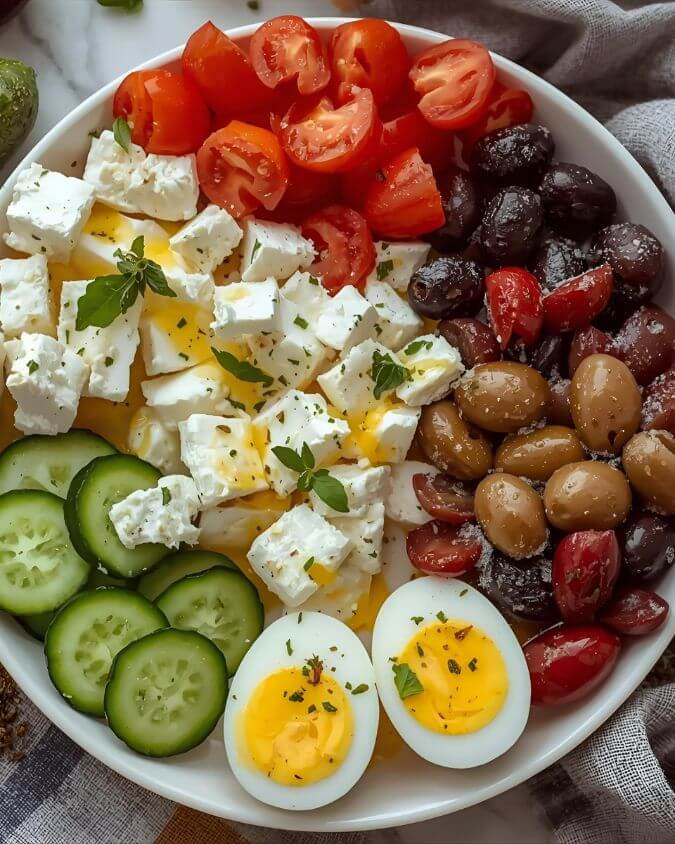
The Setup: Assemble a plate with feta cheese, olives, tomatoes, cucumber, hard-boiled eggs, and a drizzle of olive oil.
This is how my Greek mother-in-law eats breakfast every single day. No cooking. No measuring. Just arranging beautiful ingredients on a plate.
The first time she served me this, I was confused. “Where’s the breakfast food?” I asked. She looked at me like I’d grown a second head. “This is breakfast food,” she said.
She was right.
Why It Works:
- Traditional Mediterranean breakfast (you’re eating like Greeks actually eat)
- Zero cooking required
- Extremely satisfying (fat + protein + fiber)
- Easy to customize based on what you have
- Teaches you to appreciate simple, quality ingredients
Ingredients:
- 2 ounces (about ⅓ cup) feta cheese, cubed
- 10-12 mixed olives (Kalamata, green, whatever you like)
- ½ cup cherry tomatoes, halved
- ½ cup cucumber, sliced
- 1-2 hard-boiled eggs, halved
- 1 tablespoon extra virgin olive oil
- Fresh oregano or za’atar
- Optional: 2-3 walnuts, handful of arugula
Macros:
- Calories: 380
- Protein: 16g
- Fat: 32g
- Net Carbs: 7g
How to Make It:
- Arrange everything on a plate (don’t overthink it—rustic is beautiful)
- Drizzle olive oil over everything
- Sprinkle with oregano or za’atar
- Season with salt and pepper if needed (feta and olives are already salty)
- Eat slowly, savoring each bite
Pro Tips:
- Prep all ingredients on Sunday (except eggs, which stay whole until morning)
- Buy feta in brine—it lasts longer and tastes better
- This is incredibly forgiving—add or remove ingredients based on what you have
- Add a handful of arugula or spinach for greens
- My mother-in-law always adds a few walnuts—the crunch is perfect
Make-Ahead Option: Prep vegetables and cheese in containers. Assemble fresh each morning (takes 2 minutes).
Personal Note: This breakfast changed my relationship with food. I stopped thinking of breakfast as a specific category (“breakfast foods”) and started thinking of it as “first meal.” Liberating.
Breakfast #5: Chia Pudding with Mediterranean Twist
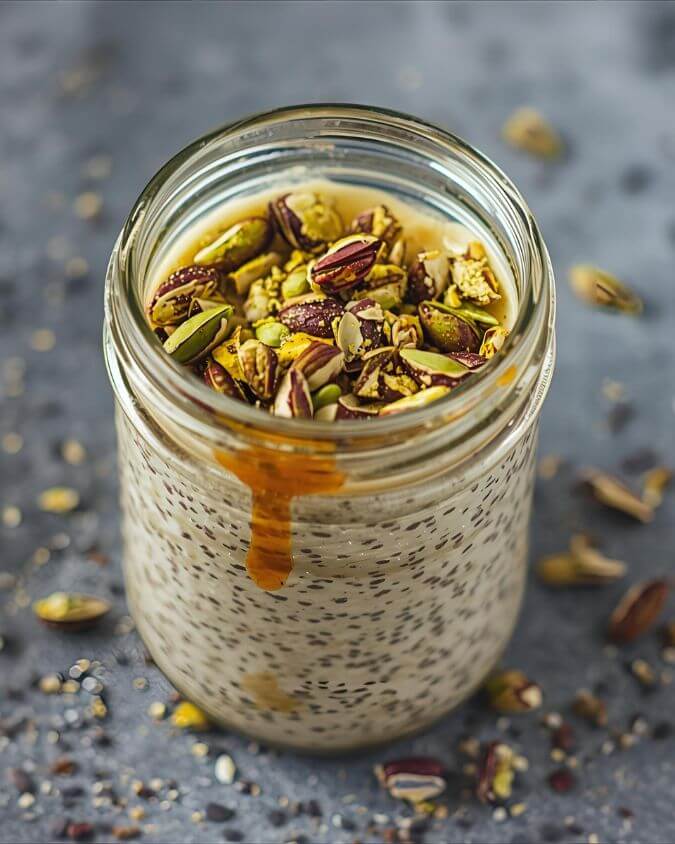
The Setup: Overnight chia pudding made with coconut milk, topped with pistachios and a drizzle of tahini.
This is the only recipe in the 5-minute category that requires advance prep (you make it the night before). But the morning effort is literally opening a jar.
Why It Works:
- Make-ahead (prep takes 5 minutes, eating takes 2)
- High fiber (chia seeds expand in liquid, keeping you full for hours)
- Omega-3s from chia seeds
- Unique Mediterranean flavors (pistachios and tahini aren’t typical “breakfast” ingredients, but they should be)
- Dairy-free option
Ingredients:
- 3 tablespoons chia seeds
- ¾ cup full-fat coconut milk (from a can)
- ½ teaspoon vanilla extract
- Pinch of ground cinnamon
- 2 tablespoons pistachios, chopped
- 1 teaspoon tahini
- Optional: 1 teaspoon monk fruit sweetener if you need it sweeter
Macros:
- Calories: 340
- Protein: 7g
- Fat: 30g
- Total Carbs: 12g
- Fiber: 6g
- Net Carbs: 6g
How to Make It:
- Night before: Combine chia seeds, coconut milk, vanilla, cinnamon (and sweetener if using) in a jar
- Stir well to combine
- Let sit 5 minutes, then stir again (prevents clumping)
- Cover and refrigerate overnight (or at least 4 hours)
- Morning: Open jar, top with pistachios and drizzle with tahini
- Eat cold or at room temperature
Pro Tips:
- Use full-fat canned coconut milk, not the carton kind (carton is mostly water)
- Stir after 5 minutes to prevent chia seeds from clumping
- Make 3-4 jars at once for grab-and-go all week
- Tahini adds authentic Middle Eastern flavor—don’t skip it
- Try different nut butters on top (almond butter, sunflower seed butter)
Make-Ahead Option: This is make-ahead. Prep 4 jars on Sunday, eat Monday through Thursday.
Personal Note: I was skeptical of chia pudding (it looked weird to me). But when I’m rushing out the door, being able to grab a jar from the fridge and eat in the car is game-changing.
Get the Complete 5-Day Meal Plan
Want all of these recipes plus 5 more in a complete meal plan with shopping lists and prep instructions?
Download Free Meal Plan →10-Minute Breakfasts (Minimal Cooking)
These require turning on the stove, but only for a few minutes. Perfect for mornings when you have a bit more time and want something warm.
Breakfast #6: Mediterranean Scrambled Eggs
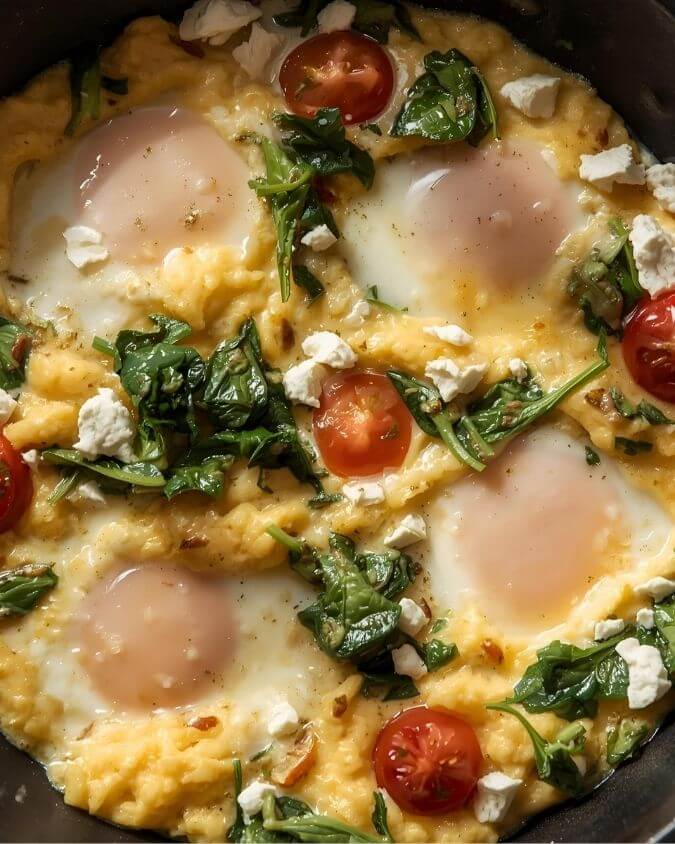
The Setup: Eggs scrambled with spinach, feta, cherry tomatoes, and oregano, all cooked in olive oil.
This is my go-to breakfast at least 3 times a week. It’s classic Greek-style eggs—simple, flavorful, loaded with vegetables, and deeply satisfying.
Why It Works:
- One-pan easy cleanup
- Packed with vegetables (nearly 2 cups!)
- High protein and fat (keeps you full for hours)
- Feta adds creaminess and authentic flavor
- Takes 10 minutes start to finish
Ingredients:
- 3 eggs
- 1 tablespoon extra virgin olive oil
- 1 cup fresh spinach (packed)
- ¼ cup cherry tomatoes, halved
- 2 tablespoons feta cheese, crumbled
- ½ teaspoon dried oregano
- Salt and black pepper to taste
- Fresh parsley to garnish
Macros:
- Calories: 380
- Protein: 24g
- Fat: 29g
- Net Carbs: 4g
How to Make It:
- Heat olive oil in a non-stick skillet over medium heat
- Add spinach, cook 1 minute until wilted (it shrinks a lot)
- Add cherry tomatoes, cook 1 more minute
- Meanwhile, beat eggs in a bowl with a pinch of salt and pepper
- Pour eggs into skillet with vegetables
- Stir gently with a spatula, scraping bottom and sides (like you’re folding the eggs, not beating them)
- When eggs are soft curds but still slightly wet, remove from heat
- Stir in crumbled feta and oregano
- Transfer to plate, garnish with fresh parsley
Pro Tips:
- Don’t overcook—remove eggs from heat while still slightly wet (they continue cooking)
- Use fresh spinach, not frozen (frozen releases too much water)
- Beat eggs gently—you want fluffy curds, not a flat pancake
- Add za’atar instead of oregano for variety
- Serve with sliced avocado on the side
Personal Note: This is the breakfast that convinced my husband that keto Mediterranean wasn’t “restrictive.” He said, “If this is diet food, sign me up for life.”
Breakfast #7: Quick Shakshuka (Simplified 10-Minute Version)
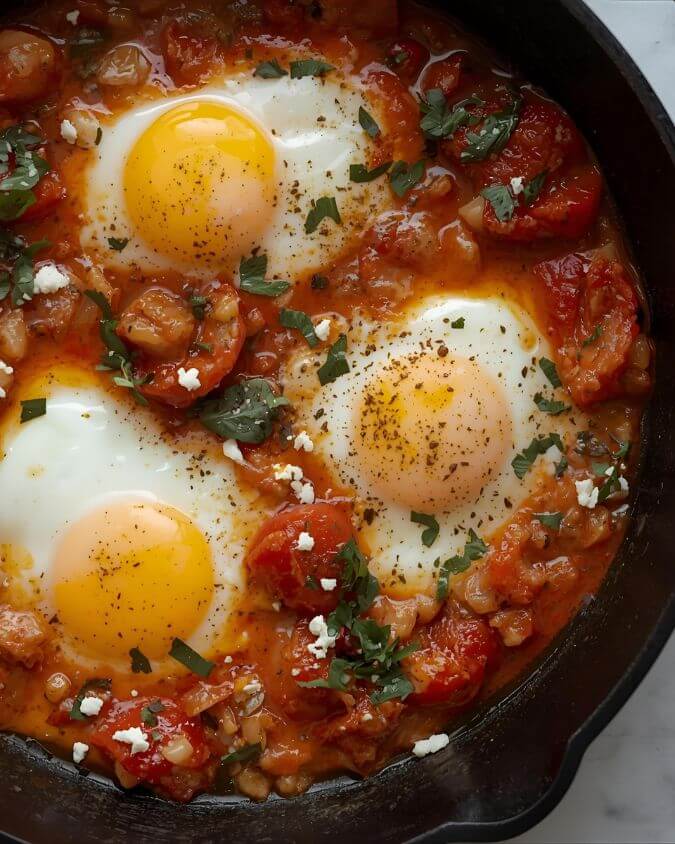
The Setup: Eggs poached in a spiced tomato and pepper sauce, topped with crumbled feta.
Traditional shakshuka simmers for 30-40 minutes. This version uses canned tomatoes and takes 10 minutes. It’s my weekday cheat.
Ingredients:
- 1 tablespoon extra virgin olive oil
- 2 cloves garlic, minced
- ½ cup canned diced tomatoes (no sugar added)
- ¼ teaspoon ground cumin
- ¼ teaspoon paprika
- Pinch of red pepper flakes
- 2 eggs
- 2 tablespoons feta cheese
- Fresh parsley or cilantro
- Salt and pepper
Macros:
- Calories: 320
- Protein: 16g
- Fat: 24g
- Net Carbs: 9g
How to Make It:
- Heat olive oil in small skillet over medium heat
- Add garlic, sauté 30 seconds
- Add canned tomatoes, cumin, paprika, red pepper flakes
- Simmer 3-4 minutes until slightly thickened
- Make 2 small wells in the sauce
- Crack an egg into each well
- Cover and cook 3-5 minutes until whites are set but yolks still runny
- Top with feta and fresh herbs
Pro Tips:
- Use fire-roasted tomatoes for extra flavor
- Add spinach to the sauce for extra greens
- The yolk should be runny—it’s the “sauce” for dipping
- Scale up easily for multiple people
Breakfast #8: Cauliflower Hash with Fried Egg
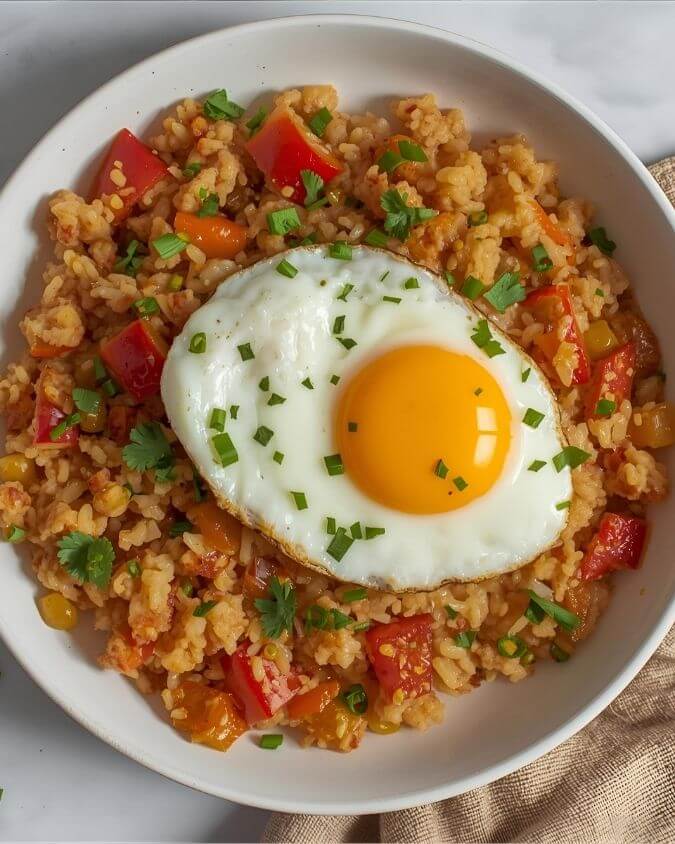
The Setup: Riced cauliflower sautéed with bell peppers, onions, and Mediterranean spices, topped with a perfectly fried egg.
This is the low-carb answer to breakfast hash. My kids call it “cauliflower breakfast potatoes” and request it weekly.
Ingredients:
- 1½ cups riced cauliflower (fresh or frozen)
- 2 tablespoons extra virgin olive oil (divided)
- ¼ cup diced bell pepper (any color)
- 2 tablespoons diced onion
- ½ teaspoon paprika
- ¼ teaspoon garlic powder
- 1 egg
- Salt and pepper
- Fresh parsley
Macros:
- Calories: 280
- Protein: 10g
- Fat: 24g
- Net Carbs: 6g
How to Make It:
- Heat 1 tablespoon olive oil in skillet over medium-high heat
- Add cauliflower rice, bell pepper, onion
- Season with paprika, garlic powder, salt, pepper
- Sauté 5-7 minutes until cauliflower is golden and tender
- Transfer to plate
- In same skillet, add remaining oil
- Fry egg to desired doneness
- Place egg on top of hash
- Garnish with fresh parsley
Pro Tips:
- Pre-riced cauliflower (frozen or fresh) saves massive time
- Don’t overcrowd the pan—cauliflower needs space to brown
- Add any leftover vegetables you have
- Top with hot sauce or za’atar for extra flavor
Breakfast #9: Greek-Style Omelet
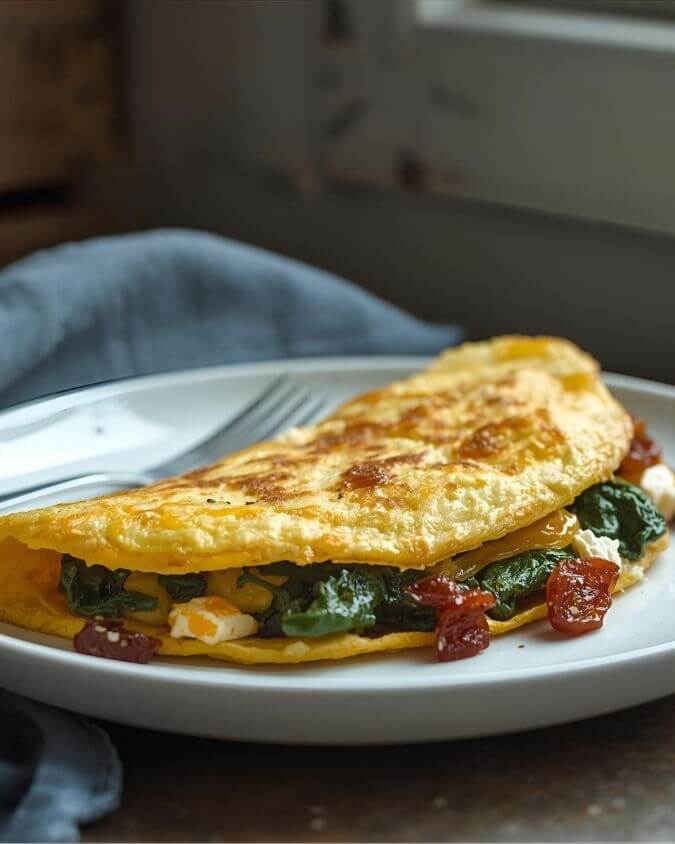
The Setup: Classic French technique, Greek flavors—spinach, feta, sun-dried tomatoes.
I failed at omelets for years. The trick? Medium-low heat and patience.
Ingredients:
- 3 eggs
- 1 tablespoon extra virgin olive oil
- ½ cup fresh spinach
- 2 tablespoons crumbled feta
- 3-4 sun-dried tomatoes (oil-packed), chopped
- Salt and pepper
- Fresh basil or oregano
Macros:
- Calories: 360
- Protein: 22g
- Fat: 28g
- Net Carbs: 4g
How to Make It:
- Beat eggs with a pinch of salt and pepper
- Heat olive oil in non-stick skillet over medium-low heat
- Pour in eggs, let them sit undisturbed for 30 seconds
- Gently push edges toward center, tilting pan so uncooked egg flows to edges
- When eggs are mostly set but still slightly wet on top, add fillings to one half
- Fold omelet in half over fillings
- Cook 30 more seconds
- Slide onto plate
Pro Tips:
- Medium-LOW heat is key—too hot makes rubbery eggs
- If your omelet tears, just call it a scramble and move on
- Use a small pan (8-inch) for 3-egg omelets
- Oil-packed sun-dried tomatoes add incredible flavor
Breakfast #10: Mediterranean Breakfast Bowl
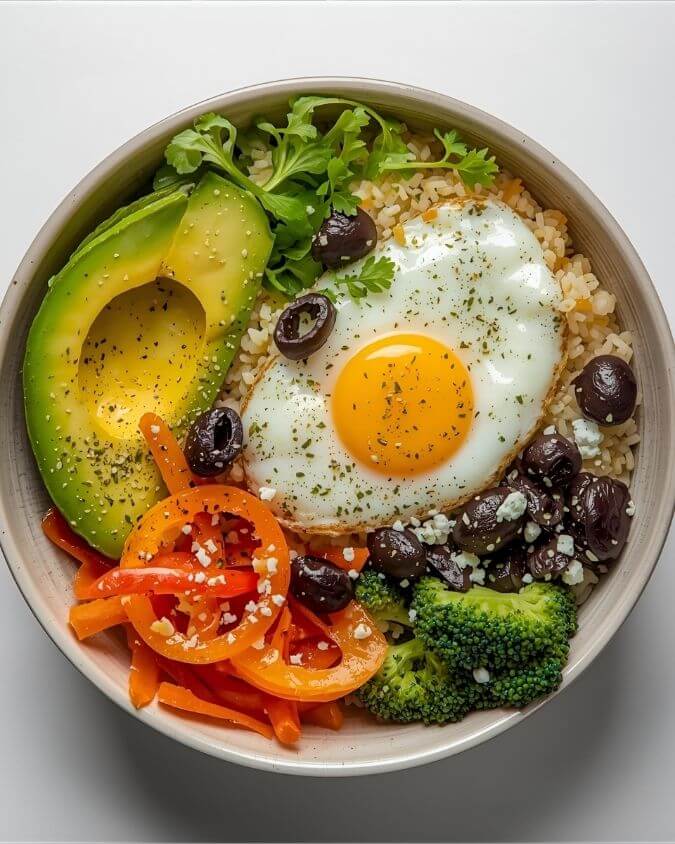
The Setup: Cauliflower rice base topped with sautéed vegetables, avocado, a fried egg, feta, and olives.
This is my “I want everything” breakfast. It’s Instagram-worthy, completely customizable, and uses whatever vegetables need eating.
Ingredients:
- 1 cup cauliflower rice
- 2 tablespoons extra virgin olive oil (divided)
- ½ cup mixed vegetables (bell peppers, zucchini, tomatoes)
- 1 egg
- ½ avocado, sliced
- 2 tablespoons crumbled feta
- 5-6 Kalamata olives
- Fresh herbs (parsley, dill, or basil)
- Lemon wedge
- Za’atar or oregano
Macros:
- Calories: 420
- Protein: 14g
- Fat: 36g
- Net Carbs: 9g
How to Make It:
- Sauté cauliflower rice in 1 tablespoon olive oil for 5 minutes
- Season with salt and oregano, transfer to bowl
- In same pan, sauté mixed vegetables 3-4 minutes
- Push vegetables to side, add remaining oil, fry egg
- Arrange everything in bowl: cauliflower rice base, vegetables on one side
- Top with fried egg, avocado slices, feta, olives
- Garnish with fresh herbs
- Squeeze lemon over everything
- Sprinkle with za’atar
Pro Tips:
- Make it a “deconstructed” bowl—arrange ingredients in sections
- Prep components on Sunday, assemble fresh daily
- This is infinitely customizable—use what you have
- Add grilled chicken or salmon for extra protein
15-Minute Breakfasts (Worth the Extra Time)
These take a bit longer but they’re worth it—either because they’re impressive enough for guests or because you can make them ahead for the entire week.
Breakfast #11: Baked Eggs in Avocado
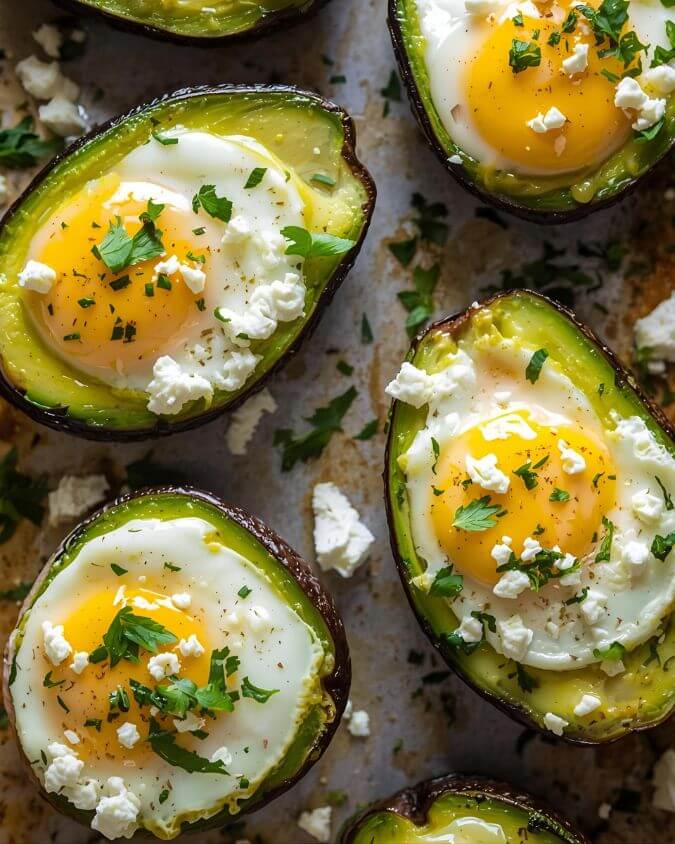
The Setup: Avocado halves with eggs baked inside, topped with feta and fresh herbs.
This is the breakfast that “broke the internet” when I posted it. I made it for brunch guests and three people took photos before eating.
Ingredients:
- 1 large ripe avocado, halved and pitted
- 2 eggs (small to medium)
- 1 tablespoon crumbled feta
- Fresh dill or parsley
- Extra virgin olive oil for drizzling
- Salt, pepper, red pepper flakes
Macros:
- Calories: 400
- Protein: 16g
- Fat: 34g
- Net Carbs: 6g
How to Make It:
- Preheat oven to 425°F
- Scoop out a bit more avocado to make the hole bigger (eat the scooped part!)
- Place avocado halves in muffin tin to keep them stable
- Crack one egg into each avocado half
- Season with salt and pepper
- Bake 12-15 minutes until whites are set but yolk is still soft
- Remove from oven, top with feta and fresh herbs
- Drizzle with olive oil and add red pepper flakes
Pro Tips:
- Use a muffin tin to keep avocados from rolling
- Small eggs work better than large (less overflow)
- Check at 12 minutes—ovens vary
- This looks impressive but is actually quite simple
Breakfast #12: Greek-Style Egg Muffins (Make-Ahead Magic)
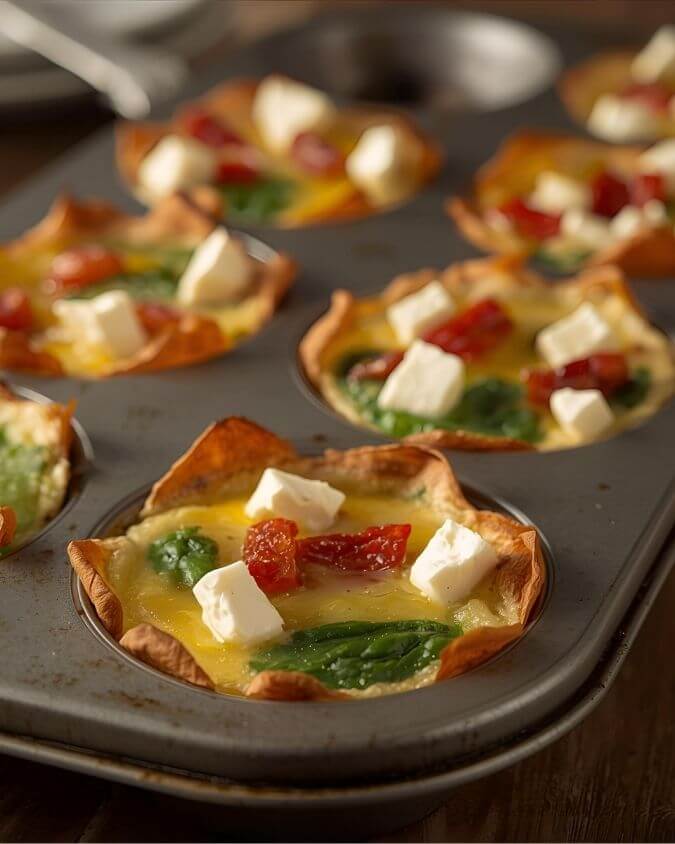
The Setup: Baked egg cups with spinach, feta, sun-dried tomatoes, and oregano.
These are my secret weapon. I make a batch on Sunday and they last all week. They’re also freezer-friendly.
This recipe has saved my sanity more times than I can count.
Ingredients (Makes 12 muffins):
- 10 eggs
- ¼ cup heavy cream or full-fat coconut milk
- 2 cups fresh spinach, chopped
- ½ cup crumbled feta
- ¼ cup sun-dried tomatoes, chopped
- 1 teaspoon dried oregano
- ½ teaspoon garlic powder
- Salt and pepper
- Olive oil for greasing muffin tin
Macros (per muffin):
- Calories: 90
- Protein: 7g
- Fat: 6g
- Net Carbs: 1g
How to Make It:
- Preheat oven to 350°F
- Grease 12-cup muffin tin with olive oil
- Whisk eggs, cream, oregano, garlic powder, salt, and pepper
- Divide spinach, feta, and sun-dried tomatoes among muffin cups
- Pour egg mixture over vegetables (fill each cup ¾ full)
- Bake 18-22 minutes until set and lightly golden
- Let cool 5 minutes, then remove from tin
Pro Tips:
- Use silicone muffin cups for easiest removal
- Store in fridge for 5 days or freeze for 3 months
- Reheat in microwave (30-45 seconds) or eat cold
- Customize with any vegetables or cheese
- Make a double batch—they disappear fast
Make-Ahead Strategy: Make Sunday evening. Grab 2-3 each morning. Reheat while you make coffee. Eat in car if needed.
Breakfast #13: Mediterranean Frittata (The Ultimate Meal Prep)
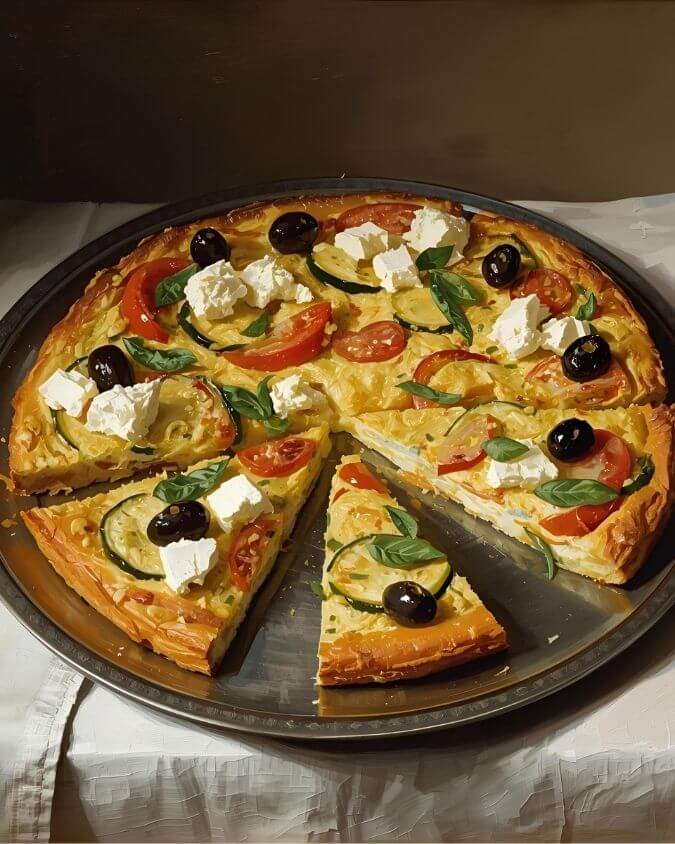
The Setup: Oven-baked frittata with zucchini, tomatoes, feta, and olives that serves 6.
A frittata is basically an Italian omelet that you finish in the oven. It’s perfect for meal prep because it serves multiple people, travels well, and tastes great hot, room temperature, or cold.
Ingredients (Serves 6):
- 10 eggs
- ¼ cup heavy cream
- 3 tablespoons extra virgin olive oil (divided)
- 1 small zucchini, diced
- ½ cup cherry tomatoes, halved
- ¼ red onion, diced
- ½ cup crumbled feta
- ¼ cup Kalamata olives, sliced
- 1 teaspoon dried oregano
- Salt and pepper
- Fresh basil for garnish
Macros (per slice, serves 6):
- Calories: 220
- Protein: 14g
- Fat: 17g
- Net Carbs: 4g
How to Make It:
- Preheat oven to 375°F
- Whisk eggs, cream, oregano, salt, and pepper in bowl
- Heat 2 tablespoons olive oil in oven-safe skillet over medium heat
- Sauté zucchini and onion 5 minutes until softened
- Add tomatoes, cook 2 more minutes
- Pour egg mixture over vegetables
- Sprinkle feta and olives on top
- Cook on stovetop 3-4 minutes (don’t stir)
- Transfer skillet to oven
- Bake 12-15 minutes until set and lightly golden
- Let rest 5 minutes, slice into 6 wedges
Pro Tips:
- Use oven-safe skillet (cast iron is perfect)
- Don’t skip the stovetop cooking—it sets the bottom
- Store slices in fridge for 5 days
- Eat hot, room temp, or cold—all delicious
- Pack for lunch with a side salad
Personal Note: I alternate between this and egg muffins for Sunday meal prep. Both last all week and make mornings effortless.
Breakfast #14: Keto Pancakes with Greek Yogurt
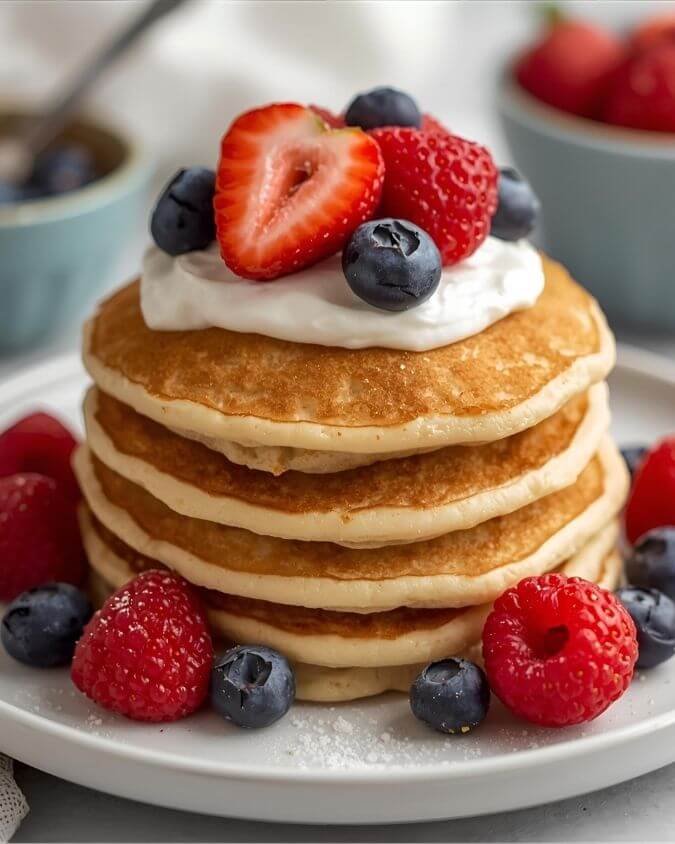
The Setup: Almond flour pancakes served with Greek yogurt, a few berries, and a drizzle of tahini.
These are my weekend treat. They’re kid-friendly, actually taste like pancakes, and keep you in ketosis.
Ingredients (Makes 6 small pancakes):
- 1 cup super-fine almond flour
- 2 eggs
- ¼ cup unsweetened almond milk
- 1 teaspoon baking powder
- 1 teaspoon vanilla extract
- Pinch of salt
- Olive oil or butter for cooking
- Toppings: ⅓ cup Greek yogurt, 10-12 blueberries, 1 teaspoon tahini
Macros (3 pancakes with toppings):
- Calories: 380
- Protein: 18g
- Fat: 30g
- Net Carbs: 9g
How to Make It:
- Whisk almond flour, baking powder, and salt in bowl
- In another bowl, whisk eggs, almond milk, and vanilla
- Combine wet and dry ingredients (batter will be thick)
- Heat griddle or skillet to medium-low
- Add a little oil or butter
- Pour ¼ cup batter per pancake
- Cook 3 minutes until bubbles form and edges look dry
- Flip carefully, cook 2 more minutes
- Top with yogurt, berries, tahini drizzle
Pro Tips:
- Use SUPER-FINE almond flour (Bob’s Red Mill or Wellbee’s)
- Medium-LOW heat prevents burning
- These are more delicate than regular pancakes—flip gently
- Double the batch, freeze extras, reheat in toaster
Personal Note: Saturday mornings, I make these while my kids color at the kitchen table. It’s become our ritual. The house smells like vanilla and everyone’s happy.
Breakfast #15: Turkish-Style Menemen

The Setup: Eggs gently scrambled in a spiced tomato and pepper sauce.
Menemen is a traditional Turkish breakfast. Every Turkish household makes it differently—this is the version I learned from my Turkish friend.
Ingredients:
- 2 tablespoons extra virgin olive oil
- ½ green bell pepper, diced
- 2 cloves garlic, minced
- 1 medium tomato, diced (or ½ cup canned)
- ¼ teaspoon paprika
- Pinch of cumin
- Pinch of red pepper flakes
- 3 eggs
- Salt and pepper
- Fresh parsley
- Optional: crumbled feta on top
Macros:
- Calories: 320
- Protein: 18g
- Fat: 24g
- Net Carbs: 8g
How to Make It:
- Heat olive oil in skillet over medium heat
- Add bell pepper, sauté 4 minutes until softened
- Add garlic, cook 1 minute
- Add tomatoes, paprika, cumin, red pepper flakes
- Cook 5-6 minutes until tomatoes break down into sauce
- Beat eggs in bowl with salt and pepper
- Pour eggs into tomato mixture
- Stir gently, letting eggs form soft curds
- Remove from heat while still slightly wet
- Top with fresh parsley (and feta if using)
Pro Tips:
- The key is letting tomatoes break down into a sauce
- Some Turks leave eggs whole (like shakshuka), others scramble—both are authentic
- Adjust spice level with more or less red pepper flakes
- This is traditionally served with crusty bread (we skip that!)
Cultural Note: In Turkey, menemen is comfort food. Every mother makes it differently. My friend says hers adds a pinch of sugar to the tomatoes—I skip that for keto but the principle is the same: simple ingredients, big flavor.
Save Time with the Complete Meal Plan
Get all 15 recipes organized into a 5-day plan with shopping lists and meal prep instructions.
Download Free Now →Meal Prep & Time-Saving Strategies
Here’s the truth: even the quickest breakfast feels impossible when you’re running late.
The solution isn’t waking up earlier (we’re all tired enough). The solution is strategic Sunday prep.
I spend 2 hours on Sunday afternoon—that’s it—and it sets me up for easy mornings all week.
My Sunday 2-Hour Prep Session
Here’s exactly what I do (and in what order):
Task #1: Hard-Boil a Dozen Eggs (20 minutes)
- Place 12 eggs in pot, cover with cold water
- Bring to boil, remove from heat, cover, let sit 10 minutes
- Transfer to ice bath
- While they cool, start Task #2
- Once cool, peel and store in container with damp paper towel
- Uses: Quick breakfast plates, avocado plates, salad toppers, snacks
Task #2: Make Egg Muffins or Frittata (30 minutes)
- Choose one: Greek egg muffins OR Mediterranean frittata
- Prep ingredients (chop vegetables)
- Mix and bake
- Let cool completely before storing
- Lasts: 5 days refrigerated, 3 months frozen
Task #3: Prep Vegetables (15 minutes)
- Wash and chop: bell peppers, cherry tomatoes, cucumber, spinach
- Store in separate containers with paper towels (absorbs moisture)
- Uses: Scrambles, omelets, breakfast bowls, plates
Task #4: Portion Greek Yogurt (10 minutes)
- Buy large container of full-fat Greek yogurt
- Portion into 5-6 small jars (1 cup each)
- Store toppings separately in small containers
- Morning routine: Grab jar, add toppings, done
Task #5: Make Chia Pudding (10 minutes)
- Mix 4 servings at once in mason jars
- Refrigerate overnight
- Lasts: 5 days
Task #6: Prep Breakfast Bowl Components (15 minutes)
- Make 3-4 portions of cauliflower rice (sauté and season)
- Store in containers
- Chop vegetables for bowls
- Morning routine: Reheat cauliflower rice, add prepped vegetables and toppings
Total Active Time: About 1 hour 40 minutes
(Some tasks overlap—eggs boil while you prep vegetables, egg muffins bake while you portion yogurt.)
Storage Tips
Best Containers:
- Glass meal prep containers with tight lids (I use [affiliate link to containers])
- Mason jars for yogurt and chia pudding
- Silicone muffin cups for egg muffins (store right in them)
Labeling System:
- Use masking tape and permanent marker
- Write: contents + date made
- Example: “Egg muffins – 12/8”
Fridge Organization:
- Dedicate one shelf to breakfast prep
- Put grab-and-go items at eye level
- Hard-boiled eggs in see-through container
Shopping List Essentials
Here’s what I buy every week to keep these breakfasts rotating:
Proteins:
- 2 dozen eggs (yes, really)
- 2 large containers full-fat Greek yogurt
- 4-6oz smoked salmon
- 8oz feta cheese (buy in brine for freshness)
Healthy Fats:
- 1 bottle quality extra virgin olive oil (my most important purchase)
- 3-4 avocados at various ripeness stages
- 1 jar Kalamata olives
- Raw walnuts, almonds, or pistachios
Vegetables:
- Fresh spinach (large container)
- Cherry tomatoes (2 pints)
- Bell peppers (3-4)
- English cucumber (2)
- Cauliflower rice (3-4 bags frozen or 2 fresh heads)
Herbs & Spices:
- Fresh: parsley, dill, basil (whatever’s available)
- Dried: oregano, thyme, cumin, paprika
- Za’atar (Middle Eastern spice blend—game changer)
Pantry Staples:
- Almond flour (super-fine for pancakes)
- Chia seeds
- Hemp hearts
- Tahini
- Canned tomatoes (no sugar added)
- Sun-dried tomatoes (oil-packed)
- Full-fat coconut milk (canned)
Budget-Friendly Tips
Where to Save:
- Buy eggs in bulk (Costco or Aldi)
- Frozen spinach instead of fresh (for cooked dishes)
- Store-brand Greek yogurt (compare labels—nutrition is identical)
- Jarred olives instead of olive bar
- Grow your own herbs on windowsill
Where to Splurge:
- Olive oil (this is where flavor lives—worth the investment)
- Wild-caught salmon (higher omega-3 content)
- Organic eggs (better for you, better for chickens)
Average Weekly Breakfast Cost:
- Budget approach: $35-45 per week for 7 breakfasts
- Mid-range approach: $50-65 per week
- Splurge approach: $70-85 per week (all organic, premium brands)
For comparison: A breakfast sandwich and coffee from a café costs $10-15. That’s $70-105 per week. Making breakfast at home is actually cheaper even when buying quality ingredients.
Personal Note: Sunday prep used to feel like a chore. Now it’s my ritual. I put on a podcast, pour a glass of wine, and spend 2 hours taking care of future me. And every morning when I grab a jar of chia pudding or egg muffin from the fridge? I thank past me.
Customization for Different Needs
One of the best things about these recipes? They’re templates, not commandments.
You can adapt almost all of them for specific dietary needs without losing the Mediterranean essence.
Dairy-Free Adaptations
Most of these recipes feature feta or Greek yogurt. Here’s how to make them dairy-free:
Feta Substitutes:
- Nutritional yeast (adds cheesy, umami flavor)
- Dairy-free feta (Violife brand is surprisingly good)
- Just skip it (add extra olives and olive oil for richness)
Greek Yogurt Substitutes:
- Coconut yogurt (full-fat, plain—Culina or CoYo brands)
- Avocado (mashed with lemon, different texture but creamy)
Cream Substitutes:
- Full-fat coconut cream (from canned coconut milk—use thick part)
- Cashew cream (blend soaked cashews with water)
Nut-Free Adaptations
Almond Flour Substitutes:
- Sunflower seed flour (grind sunflower seeds—1:1 replacement)
- Coconut flour (use ⅓ the amount and add extra egg—absorbs more liquid)
Nut Topping Substitutes:
- Hemp hearts
- Pumpkin seeds
- Sunflower seeds
- Chia seeds
Nut Butter Substitutes:
- Tahini (sesame seed butter)
- Sunflower seed butter
Egg-Free Options
Several recipes in this guide are naturally egg-free or can be adapted:
Naturally Egg-Free:
- Greek Yogurt Power Bowl
- Mediterranean Avocado Plate (omit the eggs, add extra protein)
- Quick Breakfast Plate (omit eggs)
- Chia Pudding
How to Add Protein Without Eggs:
- Smoked salmon
- Grilled chicken (leftover from dinner)
- Greek yogurt (if not vegan)
- Nuts and seeds
Higher Protein Versions (for Athletes)
If you’re very active or trying to build muscle, you might need more protein:
Easy Protein Boosts:
- Double the eggs in any recipe
- Add unflavored collagen powder to yogurt or chia pudding (20g protein per scoop)
- Add unflavored protein powder to pancakes
- Serve with a side of Greek yogurt
- Add grilled chicken to breakfast bowls
Lower Fat Versions (if Medically Required)
Some people need to moderate fat intake for medical reasons. Here’s how:
Modifications:
- Use 2% Greek yogurt instead of full-fat
- Reduce olive oil by half (use cooking spray)
- Use egg whites + whole eggs (ratio: 2 whites to 1 whole egg)
- Skip or reduce avocado
- Choose lower-fat proteins (fish, egg whites)
Important: Most people on keto Mediterranean need the healthy fats for satiety and hormone production. Only reduce fat if medically advised.
Personal Note: I have one friend who’s dairy-free and another who’s nut-free. Both make these recipes successfully with the substitutions above. The Mediterranean approach is flexible—that’s part of its beauty.
Your Questions Answered
Will I stay in ketosis eating these breakfasts?
Yes! All 15 breakfasts are designed to keep you under 30g net carbs for the entire day. Most contain 5-10g net carbs per meal, leaving plenty of room for lunch, dinner, and even a snack.
The key is net carbs (total carbs minus fiber). Vegetables have fiber, which doesn’t impact blood sugar or ketosis.
What if I’m not hungry in the morning?
Don’t force it. Intermittent fasting works beautifully with keto Mediterranean.
If you’re not hungry, that probably means:
- You ate enough fat at dinner (good!)
- Your body is efficiently burning fat for fuel (excellent!)
- Your hunger hormones are well-regulated (exactly what we want!)
Have coffee with a splash of heavy cream or coconut milk. Eat when you’re actually hungry—maybe that’s 10 AM or noon.
Listen to your body. These recipes are for when you want breakfast, not because you think you’re “supposed” to eat it.
Can I meal prep all of these?
Some yes, some no.
Best for Full Meal Prep:
- Egg muffins (make 12, refrigerate or freeze)
- Frittata (make, slice, store)
- Hard-boiled eggs (boil 12, store)
- Chia pudding (make 4-5 jars at once)
Prep Components, Assemble Daily:
- Breakfast bowls (prep cauliflower rice and vegetables, assemble fresh)
- Greek yogurt bowls (portion yogurt, add toppings fresh)
- Breakfast plates (prep vegetables, assemble fresh)
Best Made Fresh:
- Scrambles and omelets (5-10 minutes—worth cooking fresh)
- Shakshuka (tastes best fresh)
- Pancakes (freeze leftovers though!)
These seem like a lot of eggs. Is that healthy?
For most people, yes. Recent research has overturned the old “limit eggs to prevent high cholesterol” advice.
The truth:
- Dietary cholesterol doesn’t significantly impact blood cholesterol for about 70% of people
- Eggs are incredibly nutrient-dense (choline, B vitamins, selenium, vitamin D)
- The yolk contains most of the nutrition—don’t throw it away
- Eggs from pasture-raised chickens have more omega-3s
Exception: If you have familial hypercholesterolemia (a genetic condition affecting cholesterol metabolism), you should limit dietary cholesterol. Consult your doctor.
For everyone else: eggs are one of nature’s perfect foods.
I don’t like [specific ingredient]. Can I skip it?
Absolutely. These are templates, not commandments.
The only non-negotiables:
- Healthy fats (olive oil, avocado, nuts—you need these for satiety and hormones)
- Quality protein (eggs, fish, Greek yogurt)
Everything else is flexible:
- Don’t like feta? Use another cheese or skip it
- Don’t like spinach? Use arugula, kale, or Swiss chard
- Don’t like olives? Add extra avocado or nuts
- Don’t like tomatoes? Use bell peppers or zucchini
The Mediterranean approach is about principles (olive oil, fresh vegetables, quality protein, herbs) not specific ingredients.
What if I’m feeding a non-keto family?
Good news: Most of these recipes are universally appealing.
Your family can eat the same breakfast you do. Just add on the side for them:
- Toast or pita bread
- Fresh fruit
- Orange juice
You don’t have to make separate meals. Scrambled eggs with feta and vegetables? Everyone loves those. Greek yogurt bowls? Kids think they’re having dessert for breakfast.
The pancakes are especially kid-friendly—they genuinely can’t tell they’re keto.
How do I reheat egg muffins without making them rubbery?
The secret: gentle heat.
Best Method (Skillet):
- Heat skillet over medium-low
- Add a splash of water
- Place egg muffin in skillet
- Cover and heat 2-3 minutes
- The steam gently reheats without overcooking
Microwave Method:
- Place on microwave-safe plate
- Cover with damp paper towel
- Microwave on 50% power for 30-45 seconds
- Check, add 15 seconds if needed
Don’t: Microwave on high power. It makes eggs rubbery and sad.
Is this safe during pregnancy?
Generally yes, with a few precautions:
- Cook all eggs fully (no runny yolks during pregnancy)
- Use pasteurized feta (check the label)
- Choose reputable salmon sources (wild-caught, low mercury)
- Wash all vegetables thoroughly
Always check with your doctor or midwife before making dietary changes during pregnancy. Some women need more carbs during pregnancy—listen to your body and your healthcare provider.
Why This Approach Works: The Science
Let me be clear: I’m not a doctor or nutritionist. I’m just someone who spent years struggling with energy crashes, brain fog, and hormone chaos—and finally found something that works.
But I’ve also done a LOT of research. Here’s why keto Mediterranean breakfasts are so effective:
1. Sustained Energy (No More 10 AM Crash)
The Problem with Carb-Heavy Breakfasts:
When you eat oatmeal, toast, cereal, or a banana (like I used to), here’s what happens:
- Blood sugar spikes rapidly
- Insulin surges to bring blood sugar down
- Blood sugar crashes below baseline
- You feel shaky, irritable, brain-foggy, and STARVING
- You crave more carbs to feel better
- The cycle repeats
What Happens with Fat + Protein Breakfasts:
- Blood sugar stays stable
- Insulin stays low and steady
- No crash
- Energy remains stable for 4-5 hours
- No cravings
This isn’t theory. This is biochemistry.
2. Hormone Balance (Especially for Women 35+)
Your hormones need dietary fat to function properly. Here’s why:
- All sex hormones are made from cholesterol (yes, including estrogen and progesterone)
- Omega-3 fatty acids support progesterone production
- Stable blood sugar = stable insulin = better hormone balance overall
- Anti-inflammatory foods reduce interference with hormonal signaling
A 2022 study from Wake Forest University found that women following a low-carb Mediterranean approach experienced:
- Improved insulin sensitivity
- Better hormone markers
- Reduced inflammation
- More regular menstrual cycles (for those in perimenopause)
Want to understand this more deeply? I wrote an entire guide on how keto Mediterranean eating naturally balances hormones for women over 35.
3. Brain Health and Mental Clarity
Your brain is 60% fat. It NEEDS dietary fat to function optimally.
The benefits of fat-based breakfast for brain function:
- Olive oil polyphenols protect neurons from damage
- Omega-3s (from eggs and fish) support memory, mood, and cognition
- Ketones (produced when carbs are low) are a superior fuel source for the brain
- B vitamins (abundant in eggs) support neurotransmitter production
Personal experience: The difference in my mental clarity between a carb breakfast and a keto Mediterranean breakfast is night and day. After eggs with vegetables and olive oil? I can write, think clearly, and focus for hours. After oatmeal? I’m foggy and struggling by 10 AM.
4. Gut Health
Mediterranean eating supports healthy gut bacteria:
- Probiotics from Greek yogurt feed beneficial bacteria
- Prebiotics from vegetables (fiber) nourish your microbiome
- Olive oil has antimicrobial properties that support gut lining
- Fresh herbs contain compounds that support digestive health
And here’s the connection most people miss: Your gut health directly impacts your hormone balance, mood, immune function, and even your skin.
Taking care of your gut at breakfast sets the tone for your entire day.
Your Next Steps
You’ve just learned 15 breakfast ideas that prove healthy eating doesn’t mean bland, boring, or time-consuming.
But information without action is just entertainment.
So here’s what I want you to do:
Step 1: Choose Your Top 3
Look back through the recipes. Which 3 sound most appealing to you right now?
Pick:
- One 5-minute option (for rushed mornings)
- One 10-minute option (for normal mornings)
- One 15-minute option (for weekends or meal prep)
Don’t try to do everything at once. Master 3 recipes first.
Step 2: Start Tomorrow
Tomorrow morning, make one of your chosen breakfasts. See how you feel.
Notice:
- Your energy level at 10 AM
- Your hunger at lunch time
- Your mental clarity
- Your mood stability
Give it a week. Your body needs a few days to adjust.
Disclaimer: This article is for informational purposes only and is not medical advice. If you have specific dietary restrictions, allergies, or health conditions, consult with your healthcare provider before making dietary changes. Nutritional information is approximate and may vary based on specific ingredients used.
Your Turn
I want to hear from you: Which breakfast are you making tomorrow?
Leave a comment below and let me know. Are you going with the quick Greek yogurt bowl? The make-ahead egg muffins? The impressive baked eggs in avocado?
I read every single comment and often reply with personalized suggestions.