Best Canned Sardines for Keto: 6 Brands a Mediterranean Cook Actually Buys
Why canned sardines belong in a keto Mediterranean pantry
For a long time I was a fresh-fish snob. I’d drive thirty minutes to the good fishmonger, buy a beautiful piece of salmon, and pretend that was the only “real” way to do Mediterranean. Then perimenopause arrived, my anxiety took a wrong turn, and I started reading the omega-3 research seriously. The thing I kept finding in the studies wasn’t salmon. It was sardines.
A 3.75 oz can of brisling sardines in olive oil delivers somewhere between 800 and 1,800 mg of EPA + DHA omega-3s, 14–18 g of protein, zero net carbs, and a meaningful dose of vitamin D, calcium (from the soft little bones), selenium and B12 — for around two to four dollars. There is no other animal protein on earth that does that math.
If you’re following the keto Mediterranean hybrid approach — high-quality fats, moderate protein, very low carb, anchored in olive oil and seafood — canned sardines are the cheat code. They’re shelf-stable, they don’t need cooking, the omega-3s are protected from oxidation by the can, and you can build a real meal around one in under five minutes. The only thing standing between most women and the metabolic benefits of these fish is choosing a brand whose tin you actually want to open. Which is why I wrote this post.
What to look for on the label (and what to skip)
Sardines are one of the few foods where the ingredient list should be very, very short. Three things, ideally. Sometimes four. Anything beyond that and you should ask why.
The green-light list
- Wild-caught — sardines are too small to farm commercially, so almost all sardines are wild. But the can should say so explicitly.
- Packed in extra virgin olive oil — keeps the fish moist, the oil itself is a flavor and nutrient bonus, and you can drizzle it onto a salad after.
- Three-to-five-ingredient label — sardines, olive oil, salt. Maybe lemon, maybe natural smoke, maybe vinegar or capers if it’s a flavored variety. That’s it.
- Bones in for everyday eating — the bones are soft, you don’t notice them, and that’s where the calcium is.
- BPA-free or BPA-NI lining — increasingly standard, but worth checking. King Oscar and Wild Planet both certify BPA-NI cans.
- Pull-tab lid — minor, but if you eat sardines on busy weekday lunches, this matters more than you’d think.
The red-flag list
- Soybean oil, sunflower oil, “vegetable oil” — defeats the entire purpose. You’re trying to eat anti-inflammatory fats, not pour seed oils on top of them. Why this matters more than people realize.
- Tomato sauce as the primary medium — fine occasionally, but the sugar and carbs add up if it’s your default. Read the label: some are 4–8 g carbs per tin.
- “Pure” olive oil instead of extra virgin — refined, low polyphenol, not what you want. Extra virgin or skip it.
- Added sugar, modified starch, “natural flavors” — you don’t need any of it in a fish tin.
- Mystery origin — if the can won’t tell you what ocean the fish came from, walk away.
My top three picks if you’re starting today
If you’re standing in front of the canned fish aisle and you want me to just tell you what to buy, here it is. These are the three I genuinely have in my pantry right now, ranked by how often I reach for them.
★ Top pick · Best overall
Wild Planet Wild Sardines in Extra Virgin Olive Oil
The one I open when I want to remember why I started eating sardines in the first place.
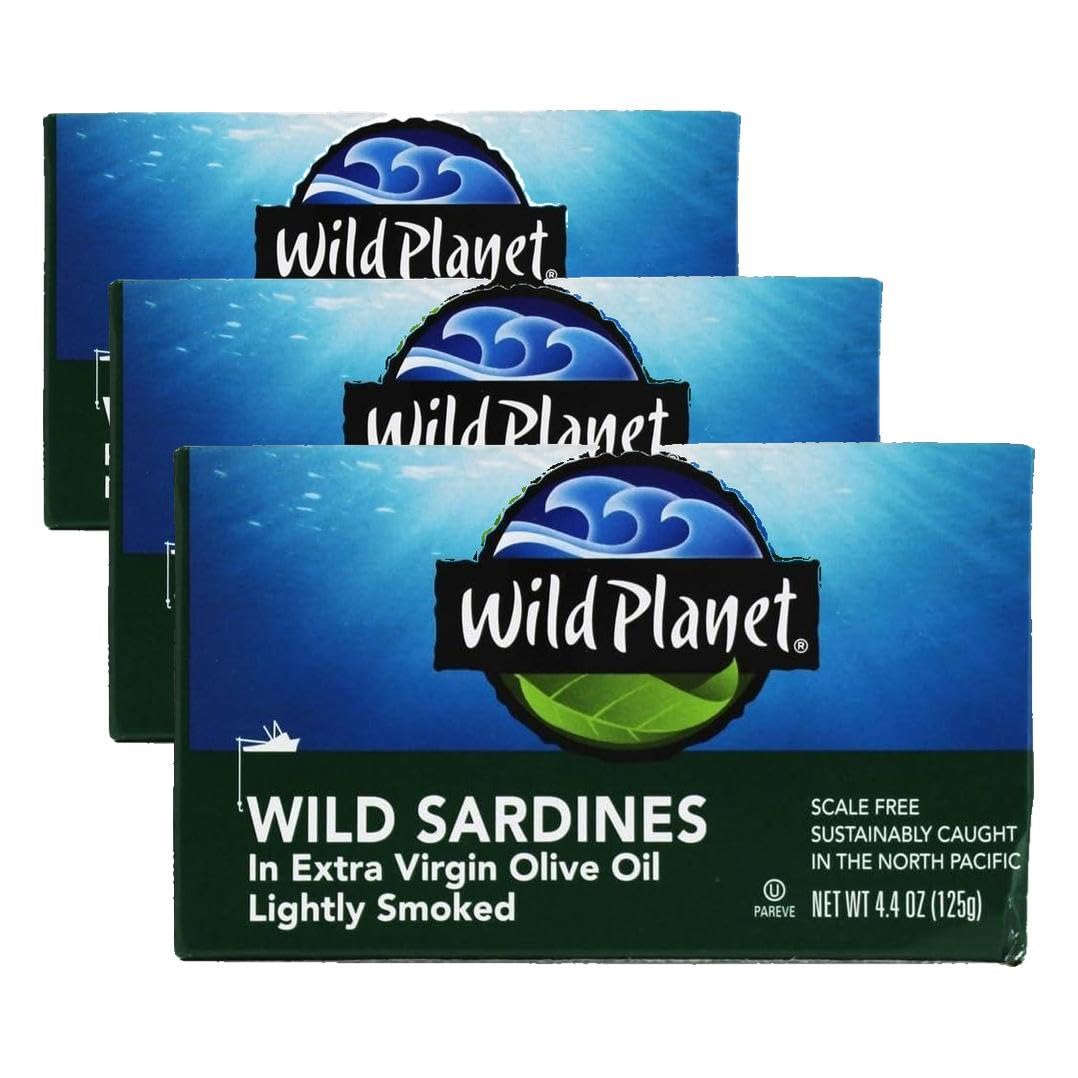
Wild Planet is what convinced me sardines weren’t actually a chore. The fish are larger than the Norwegian brisling style — meatier, firmer, almost steak-like — and they’re packed in organic extra virgin olive oil with a touch of natural smoke. The smoke is subtle, not aggressive. The fish hold their shape on a salad instead of dissolving. Per-can omega-3 numbers are some of the highest on the market, and one tin gives you 50% of your daily vitamin D, which matters enormously if you’re on the keto Mediterranean approach for hormone reasons.
The catch: they’re not the cheapest. A 12-pack runs higher than King Oscar or Season. The fish source is North Pacific (Japan), which is excellent from a sustainability standpoint but isn’t the romantic Atlantic-Norway-fjord story.
Why I keep buying them
- Highest omega-3 per tin in this list
- Organic EVOO, not regular
- Meaty texture survives a salad
- 50% DV vitamin D in one can
- Non-GMO, kosher, third-party mercury tested
What’s not perfect
- ~30% more expensive per can than King Oscar
- Larger fish; not for people who like delicate brisling
- Smoky note, even though mild, isn’t to everyone’s taste
★ Best traditional · Best value
King Oscar Brisling Sardines in Extra Virgin Olive Oil
If you’ve ever eaten a sardine in Europe and liked it, this is probably what you ate.
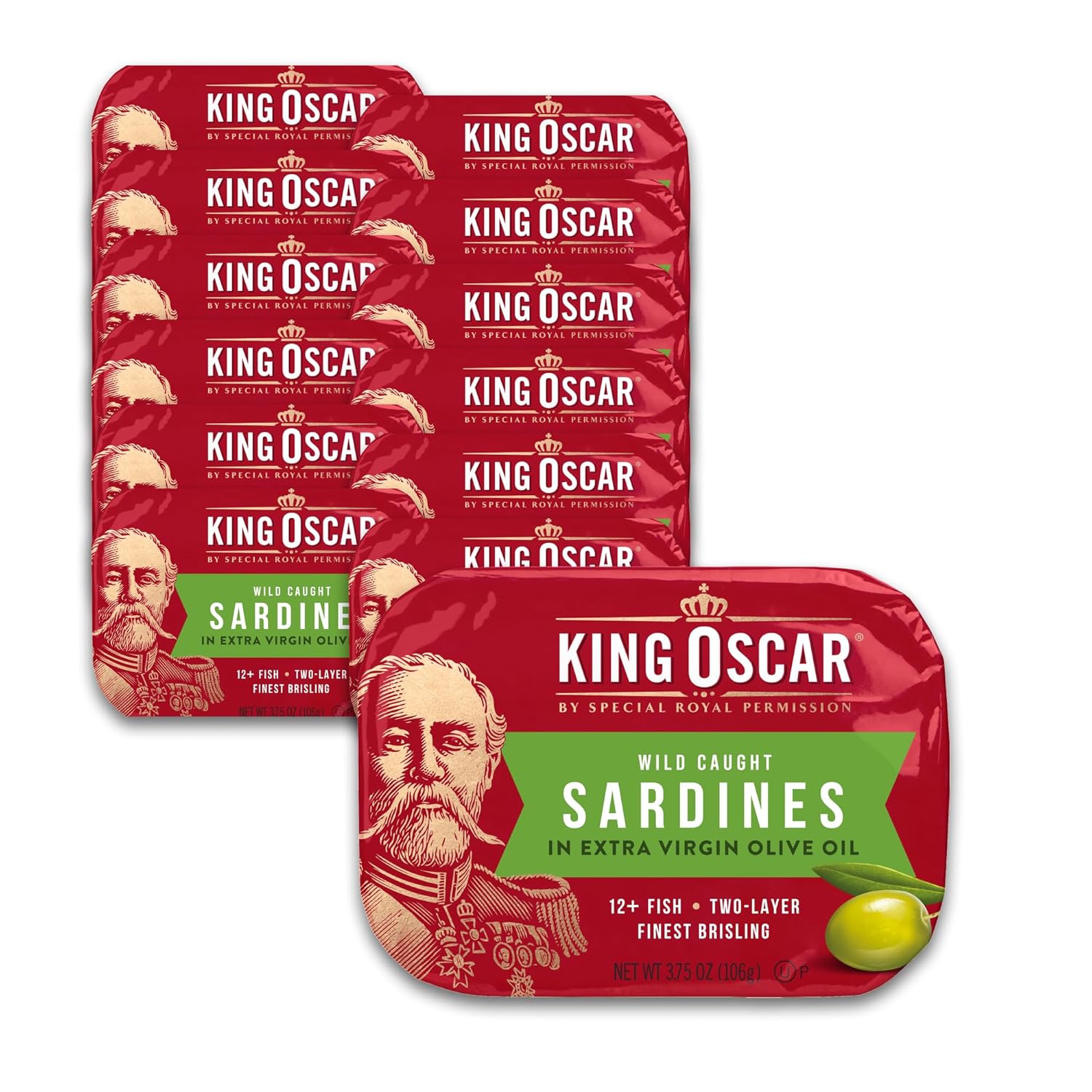
King Oscar has been doing this since 1902. They’re brisling sardines (a smaller, milder species, sometimes called sprats), wild-caught from Norwegian fjords and the North Sea, lightly oak-wood-smoked, and hand-packed. The ingredient list is three things: sardines, extra virgin olive oil, salt. They’re the #1 selling sardine in America for a reason — they hit the sweet spot of authentic, accessible, and affordable.
The brisling are smaller and more delicate than Wild Planet’s. You get 12 to 22 fish in a tin instead of 4 to 6. The texture is softer, slightly oilier, more “old-world” in a way that I find comforting. They’re also the easiest sardine to feed to a sardine-skeptic, because the small size and gentle smoke take the edge off.
Why I keep buying them
- Cleanest 3-ingredient label in the category
- BPA-NI certified cans
- Mild flavor — best for sardine beginners
- Roughly 30% cheaper per tin than Wild Planet
- Available at almost every US grocery store, not just Amazon
What’s not perfect
- Smaller fish; less satisfying as a stand-alone meal
- Per-tin omega-3 is lower than Wild Planet (smaller fish, smaller dose)
- Lighter texture means they fall apart on a salad
★ Best protein density · Best for meal prep
Season Sardines in Extra Virgin Olive Oil
The workhorse tin for salads, lunch boxes, and “I’m hungry now” moments.
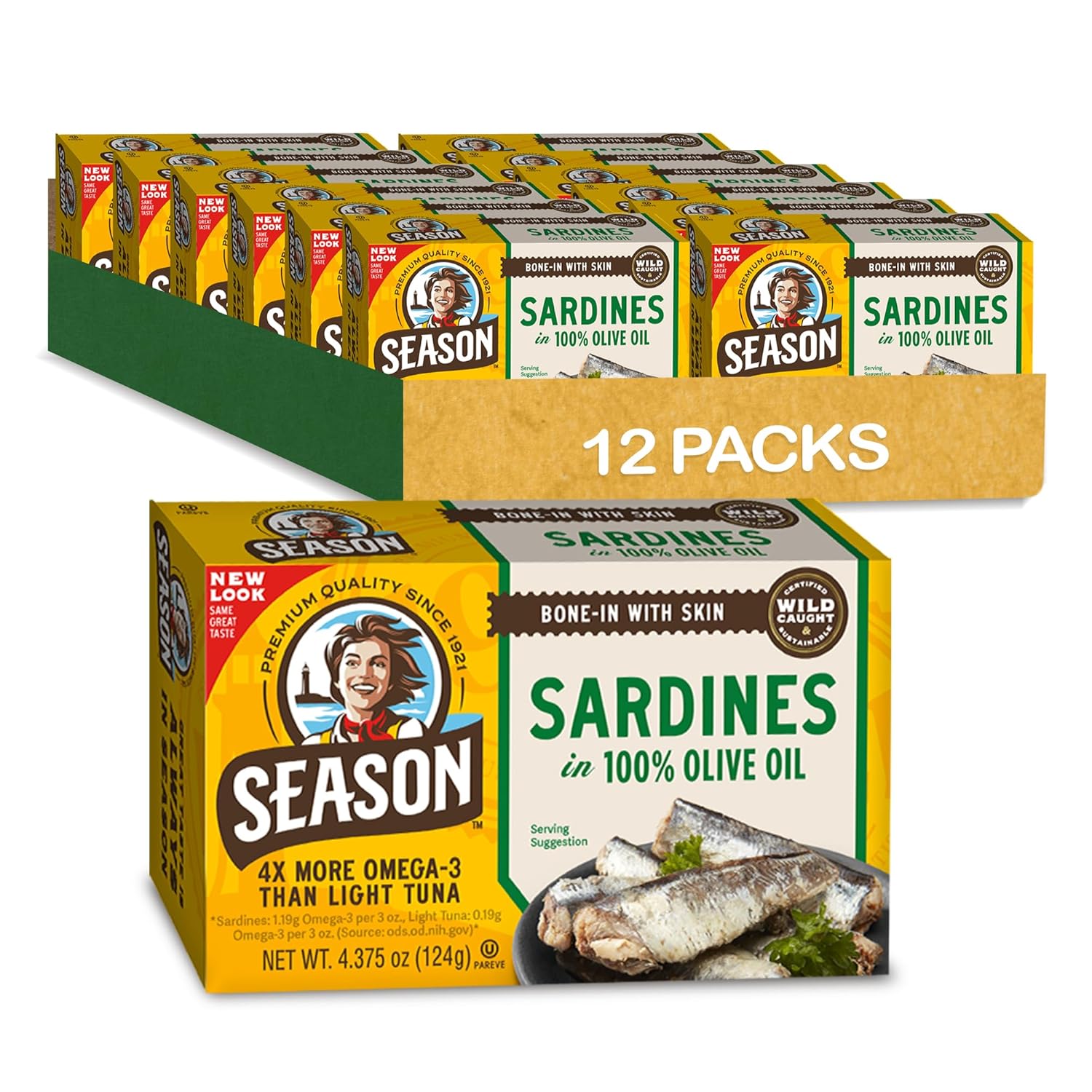
Season makes a few different sardine lines, and the one I keep buying is their standard sardines in extra virgin olive oil — the larger Atlantic sardines from off the coast of Morocco, not the brisling. Twenty-two grams of protein per tin is the highest on this entire list, which matters if you’re using sardines as a real meal rather than a snack. Friend of the Sea sustainability certification, and the EVOO they use actually tastes like olive oil rather than the neutral stuff some brands hide behind.
Season’s brisling line (in the smaller tin) is also excellent and competes with King Oscar at a slightly lower price point. They’ve been a US East Coast pantry staple since 1921 and are kosher-certified, which matters for some readers.
Why I keep buying them
- Best protein-per-tin ratio (22 g)
- Real Mediterranean source (Atlantic / Morocco)
- Friend of the Sea certified
- Kosher certified
- Two genuinely useful product lines (regular + brisling)
What’s not perfect
- Distribution is patchier than King Oscar — easier to find on Amazon than in stores
- Larger fish means more bones; not everyone loves that
- The brisling line uses “pure” olive oil, not EVOO — read carefully and pick the right tin
See Season Sardines on Amazon →
The other three brands worth knowing about
Once you’ve tried the top three and decided sardines are actually part of your life, these three are worth bringing into the rotation for variety, special occasions, or specific use cases.
4. Bela Olive Oil Sardines (Portuguese)
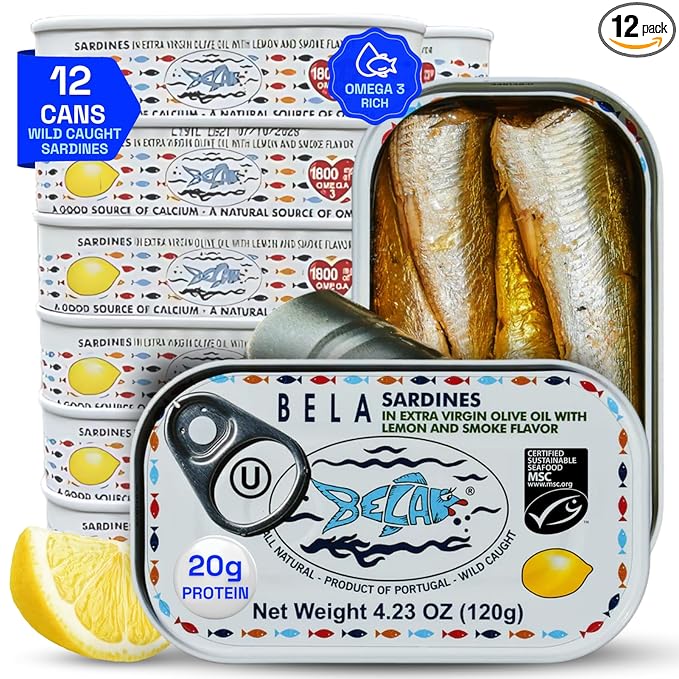
Bela makes a lovely Portuguese sardine — slightly larger, packed in good olive oil, often with optional flavor variations (lemon, hot sauce, tomato). They’re meaningful if you want to lean into the Iberian Mediterranean rather than the Norwegian one. Cheaper than Wild Planet, more interesting than the cheapest supermarket tin. Worth keeping a few on hand for variety.
5. Crown Prince Skinless & Boneless Sardines
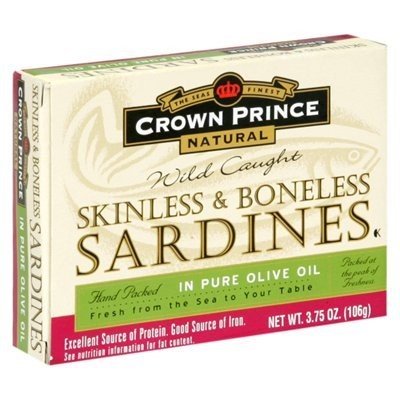
This is the brand I keep for two specific situations: feeding sardine-anxious dinner guests, and using sardines as a recipe ingredient where I don’t want bones (sardine pâté, blended dressings, things that go in a food processor). Skinless and boneless is a small step backward nutritionally — you lose calcium and a tiny bit of omega-3 — but it’s a useful tin to own. Not for everyday. For specific jobs.
6. Matiz Sardines from Galicia
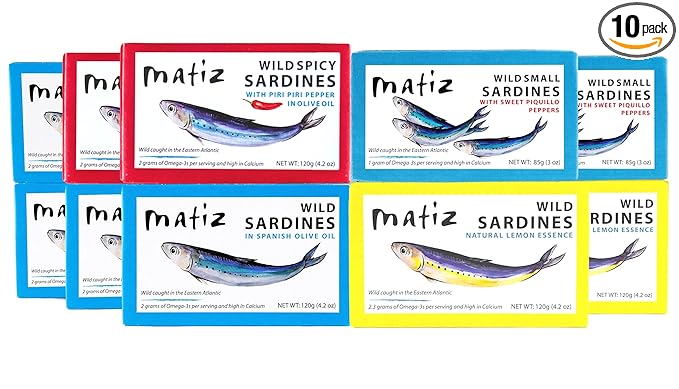
Matiz is the romantic, gift-the-tin-on-a-cheese-board sardine. Hand-packed in Galicia, Spain, in good Spanish olive oil, with that beautiful illustrated tin. They cost roughly twice what Wild Planet does. They’re not better in a strictly nutritional sense — but they’re better in the sense that they make you actually want to eat sardines on a Tuesday. If your relationship with food matters to your relationship with your body (and on perimenopause, mine very much does), this is a worthwhile splurge once a month.
Quick comparison table
The numbers at a glance, for when you’re standing in the aisle on your phone. Tap any brand name to jump to Amazon.
| Brand | Tin (oz) | Protein | Source | Best for | Price tier |
|---|---|---|---|---|---|
| Wild Planet | 4.4 | 18 g | N. Pacific | Best overall | $$$ |
| King Oscar | 3.75 | 16 g | Norway | Beginners, value | $$ |
| Season | 4.37 | 22 g | Morocco | Protein density, salads | $$ |
| Bela | 4.4 | 17 g | Portugal | Variety, flavored tins | $$ |
| Crown Prince (S&B) | 4.4 | 17 g | Morocco | Skinless/boneless cooking | $$ |
| Matiz | 4.2 | 17 g | Spain | Special occasions | $$$$ |
Prices vary, and Amazon multipack discounts can shift tiers significantly. The rankings here are for “olive oil + plain” varieties only — flavored tins (lemon, capers, smoked, tomato) often run higher.
How I actually use them on keto Mediterranean
A brand list is only useful if you actually open the tin. Here’s the rotation I’ve settled into after three years of this:
The 90-second sardine plate
Tin opened, drained slightly over the trash, contents tipped onto a plate. Half a cucumber sliced, a small handful of olives, lemon wedge, a soft-boiled egg or two if I have them in the fridge. Pour of EVOO from a separate bottle, flaky salt, black pepper. That’s lunch. That’s also breakfast on hard days.
Sardines for breakfast — the underrated keto Mediterranean morning
This is the use case people skip, and it’s quietly the best one. Sardines for breakfast solves three problems at once: you get a stable-blood-sugar morning (zero carbs), a real dose of B12 and vitamin D before noon (when your circadian system can actually use them), and you skip the cortisol spike that comes with a sweet or carb-heavy breakfast. On the days I open a tin of King Oscar with a soft-boiled egg and a slice of cucumber, my 11am brain is sharper than on the days I have a “normal” breakfast — and I notice it without trying.
If you want a structured way in, I wrote a full guide on this: anti-inflammatory breakfast ideas for keto Mediterranean — sardines slot in as one of the easiest options on that list, but it gives you four other ways to start your morning if you’re not ready to commit to fish at 7am. Both approaches feed the same goal: stop crashing by 11.
The Sunday-prep sardine salad
Two tins of Season sardines, one bag of arugula, a cucumber diced, half a red onion thinly sliced, a cup of cherry tomatoes halved, a generous handful of kalamatas, plenty of EVOO and lemon. Mix, divide between two glass containers, refrigerate. Lunch for two days, no cooking, full keto Mediterranean macros, ~3g net carbs.
Sardine pâté for guests who think they hate sardines
One tin of Crown Prince skinless and boneless, drained. Three tablespoons full-fat Greek yogurt, juice of half a lemon, a teaspoon of capers, fresh dill, salt and pepper. Blend or fork-mash. Serve with cucumber rounds, celery sticks, or keto crackers. People who claim to hate sardines have asked me for this recipe twice.
The “I just got home and I’m starving” non-recipe
Open the tin. Eat directly out of it with a fork while standing at the kitchen counter. Drink a glass of water. Decide what dinner is going to be. This is, honestly, half my use of King Oscar.
Ready to actually start?
Grab the free 5-Day Keto Mediterranean Reset — five days of meal plans (sardines included), shopping lists, and a printable pantry guide. No fluff, no upsell.
Get the free reset plan →Frequently asked questions
Are canned sardines really keto-friendly?
Yes — sardines packed in olive oil or water are zero-carb, high-protein, high-healthy-fat foods. The only sardine tins that aren’t strictly keto are the ones in tomato sauce or mustard sauce, which can carry 2–8 g of carbs per tin from added sugar or starches. Read the nutrition label.
Sardines in olive oil vs sardines in water — which is better for keto?
For keto Mediterranean specifically, olive oil. The fat is part of the meal, the EVOO carries fat-soluble nutrients (vitamins A, D, E, K) into your cells, and the flavor is dramatically better. Sardines in water are fine if you’re cooking them into a recipe and adding your own olive oil, but for eating straight from the tin, olive oil wins every time. More on why oil quality matters here.
Do sardines help with ketones or weight loss on keto?
Sardines support the metabolic state keto is trying to create, but they don’t directly raise ketone levels the way MCT oil might. What they do well: they’re zero-carb (so they don’t disrupt ketosis), they’re high in protein (which preserves muscle on a low-calorie diet), and they’re rich in omega-3s, which independent research has linked to lower inflammation and better insulin sensitivity. For keto-Mediterranean weight loss specifically, sardines are one of the most efficient calories you can eat.
How often can I eat canned sardines per week?
Three to four tins a week is a common sweet spot for adults. Sardines are very low in mercury (they’re small fish, low on the food chain), so the safety ceiling is much higher than with tuna or larger fish. The practical limit is sodium — most tins carry 200–400 mg, which adds up. If you’re eating a tin a day, vary your other foods to keep total daily sodium in a healthy range.
Why do some sardines say “brisling” and others don’t?
Brisling (or sprat) is a specific small species, traditionally from Northern European waters — Norway, Scotland, the Baltic. King Oscar and Season’s brisling line are both brisling. Wild Planet, Bela, Matiz and most Mediterranean brands use larger sardine species (Sardina pilchardus or Sardinops sagax). Brisling are milder and more delicate; full-size sardines are meatier and have more pronounced flavor. Neither is “better” — it’s a matter of what texture you prefer.
Are sardines the healthiest fish?
By a strict nutrient-density-per-dollar measure, sardines are arguably the best fish you can eat. Compared to salmon, sardines have similar omega-3 content, more calcium (because of the soft bones), more vitamin D, comparable protein, far less mercury, and cost a fraction of the price. The case isn’t that sardines are objectively healthier than salmon — it’s that they’re so much more accessible that the realistic difference in your diet ends up favoring sardines. See the full sardines-vs-salmon breakdown here.
Should I worry about BPA in canned sardines?
It’s worth checking the label. Most premium brands — Wild Planet, King Oscar, Season — now use BPA-NI (BPA non-intent) or BPA-free linings. Generic supermarket store brands often don’t disclose. If you’re eating sardines several times a week, paying the small premium for BPA-NI cans is a sensible insurance policy.
Why do I feel so good after eating sardines?
It’s not your imagination. A single 4-oz tin can deliver close to a full day’s vitamin B12, half your daily vitamin D, ~1,500 mg of omega-3 EPA + DHA, and meaningful selenium and iodine — all of which are precursors or cofactors for serotonin, dopamine, and thyroid hormone production. If you’ve been low in any of those (and most perimenopausal women are low in at least one), the post-sardine “lift” is a real, biochemically-explainable thing. More on that experience here.