Herb-Crusted Prime Rib –
Reverse Seared, With Charts
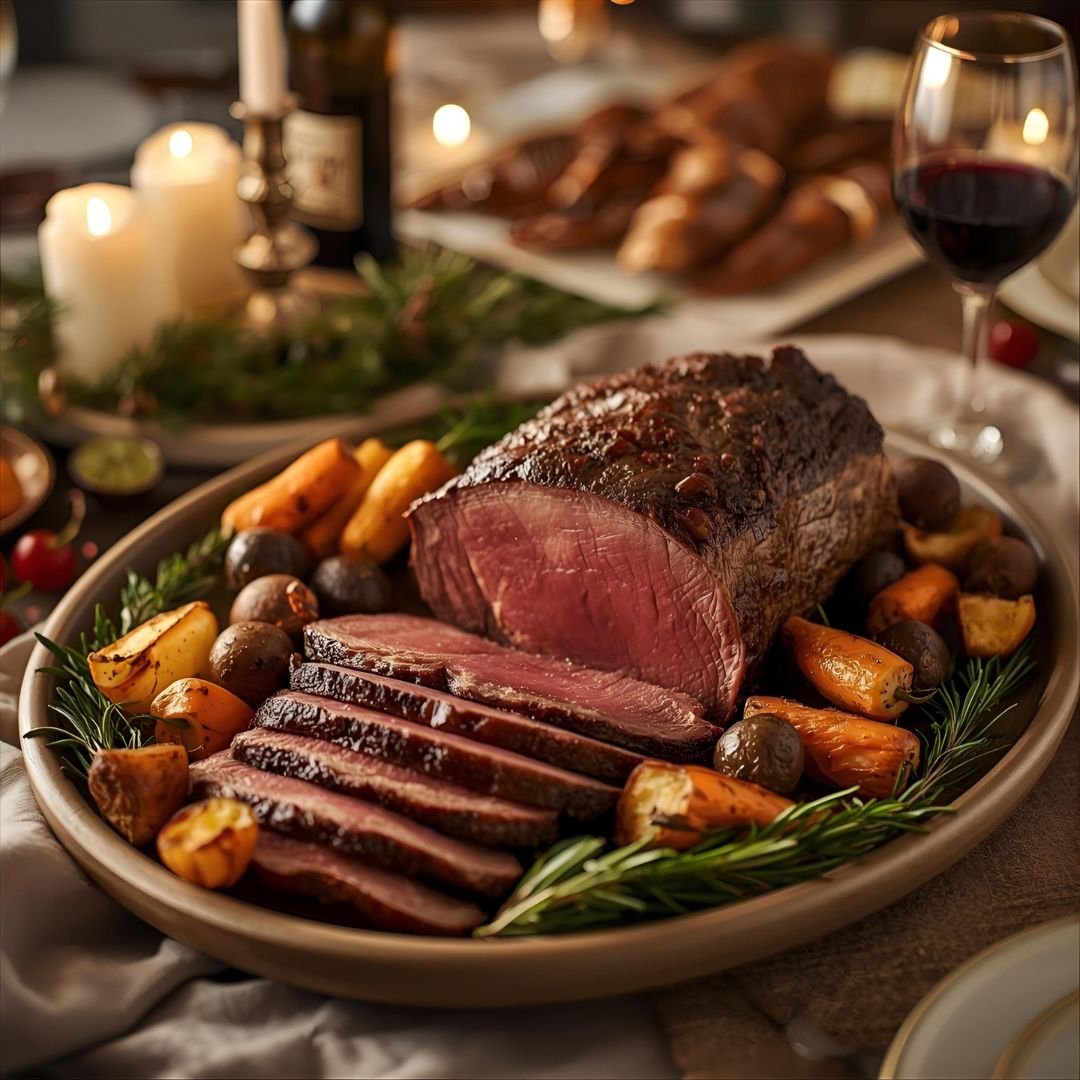
There’s something almost sacred about the moment a perfectly roasted prime rib is placed at the centre of the table. The golden-brown crust. The aromatic herbs perfuming the air. The conversation stops for just a moment as everyone takes in the sight.
I wanted to stay true to Mediterranean cooking — no breadcrumb crusts, no sugary glazes. Just high-quality beef enhanced with olive oil, fresh herbs and garlic.
“Prime rib doesn’t need complicated techniques or fancy ingredients. It requires respect for the meat, patience, and a thermometer.”
The method below is a reverse sear: low and slow at 250°F until the centre is where you want it, then a short blast at 500°F to build the crust. It’s the more forgiving order for a large roast, and it’s why every slice comes out pink edge to edge instead of grey around the outside.
Below you’ll find the herb crust, a cooking time chart by weight, an internal temperature chart, and the one step almost everyone rushes.
What Is Reverse Searing, and Why Use It?
Reverse searing means cooking low first and browning last, instead of searing at the start the way most roast recipes tell you to. For a large cut it’s simply the more reliable order.
The 250°F phase brings the whole roast up to temperature gently and evenly — almost no grey band under the crust, because the outside never gets far ahead of the centre. Then 10–15 minutes at 500°F browns the surface in the time it takes to build a crust, and not long enough to push the middle past medium-rare.
It’s also far more forgiving of timing. A traditional high-heat roast gives you a narrow window; this one gives you an hour of slack, because at 250°F the temperature climbs slowly enough that you can check, adjust, and still be fine.
The trade: it takes longer. A reverse-seared roast needs 2–4 hours in the oven plus a rest, where a hot-and-fast roast might take 90 minutes. What you’re buying with that time is the near-elimination of the single most expensive mistake in this recipe — overcooking a $100 piece of beef.
Prime Rib Cooking Time Chart
At 250°F, budget 20–25 minutes per pound to reach 120°F internal. Then add the sear and the rest. These are planning figures, not instructions — see the warning underneath.
| Roast Weight | 250°F Phase (to 120°F) | 500°F Sear | Rest | Total to Plan For |
|---|---|---|---|---|
| 4 lb | 1 hr 20 min – 1 hr 40 min | 10–15 min | 20–30 min | ~2 hr 15 min |
| 5 lb | 1 hr 40 min – 2 hr 05 min | 10–15 min | 20–30 min | ~2 hr 40 min |
| 6 lb | 2 hr – 2 hr 30 min | 10–15 min | 30–40 min | ~3 hr 15 min |
| 7 lb | 2 hr 20 min – 2 hr 55 min | 10–15 min | 30–40 min | ~3 hr 40 min |
| 8 lb | 2 hr 40 min – 3 hr 20 min | 10–15 min | 30–40 min | ~4 hr 05 min |
| 10 lb | 3 hr 20 min – 4 hr 10 min | 15 min | 40–45 min | ~5 hr |
Use this chart to plan your day, not to cook the roast. Oven calibration varies by 25°F either way. A short fat roast and a long thin roast of the same weight cook at different speeds. Bone-in runs slower than boneless. The chart tells you when to put it in; the thermometer tells you when to take it out.
Prime Rib Temperature Chart
Two numbers matter: the temperature you pull at, and the temperature you serve at. They aren’t the same, and that gap is where most prime rib goes wrong.
| Doneness | Pull From Oven | Final Temp After Rest | What You Get |
|---|---|---|---|
| Rare | 110–115°F | 120°F | Cool red centre |
| Medium-rare ← recommended | 120–125°F | 130°F | Warm red centre |
| Medium | 130–135°F | 140°F | Warm pink centre |
| Medium-well | 140–145°F | 150°F | Slightly pink |
| Well-done | 150°F+ | 160°F+ | No pink |
Carryover cooking is why. When the roast leaves the oven, the hot exterior keeps conducting heat inward for another 20 minutes or so — the centre climbs 5–10°F with the oven off. Pull at 130°F expecting medium-rare and you’ll serve medium.
Where to measure: the thickest part of the meat, avoiding bone and fat. Bone conducts heat faster and fat slower, so both give false readings. If the roast is an awkward shape, check in two places and trust the lower number.
The one tool worth buying before you cook this: a digital instant-read thermometer — or better, a leave-in probe with an alarm you can set to 120°F, so you genuinely cannot miss the pull point. It’s the difference between confidence and hoping. I compared the ones worth owning in my guide to meat thermometers for holiday roasts.
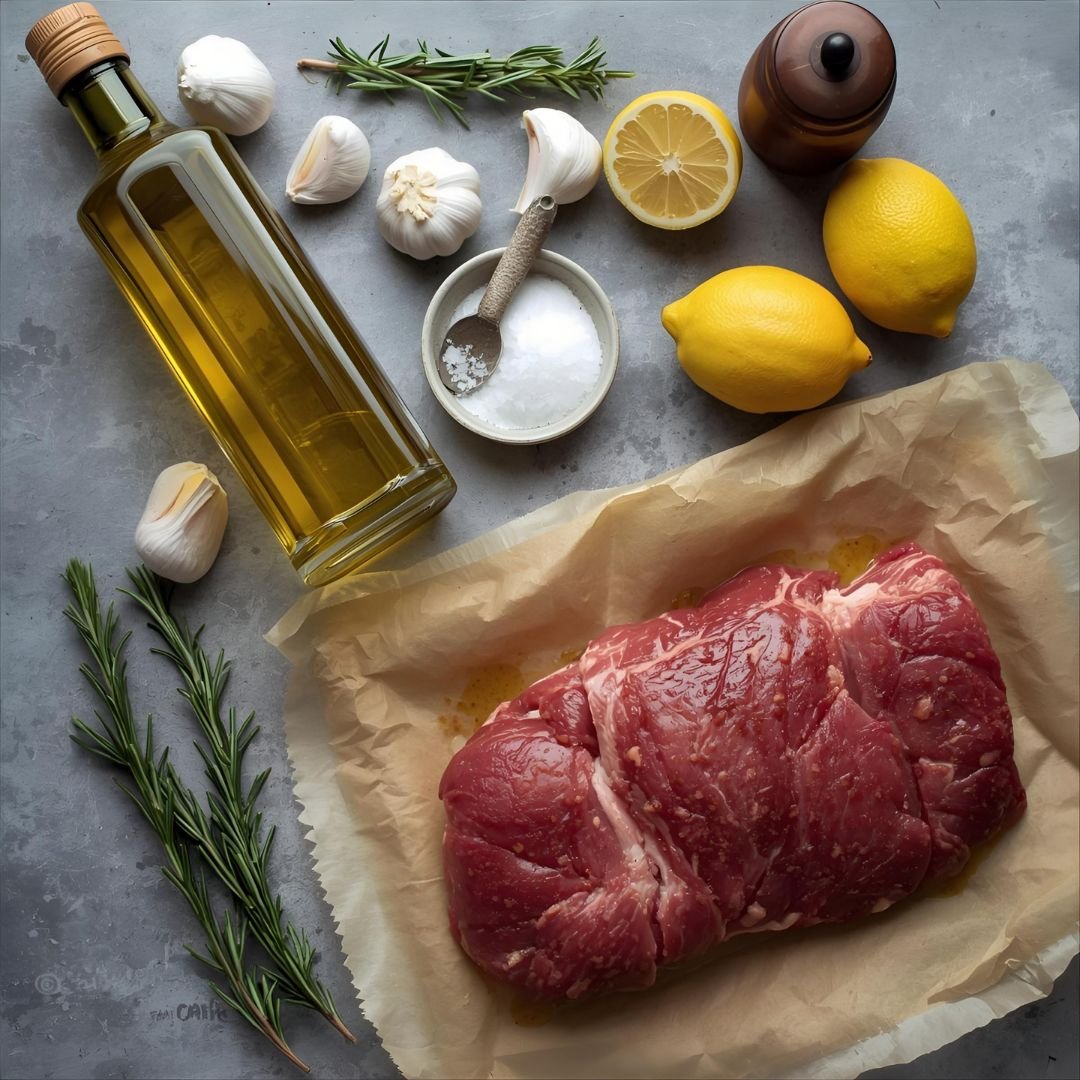
The Recipe
Herb-Crusted Prime Rib (Reverse Sear)
Serves 6–10 · Plan ½ to ¾ pound bone-in weight per person
For the Prime Rib
- 1 bone-in prime rib roast, 4–6 lbs — ask the butcher to french the bones and tie them back on
- ¼ cup extra virgin olive oil — best quality you can afford
- 6 cloves garlic, minced — fresh only, no jarred
- 3 tbsp fresh rosemary, finely chopped (or 1½ tbsp dried)
- 2 tbsp fresh thyme leaves (or 1 tbsp dried)
- 1 tbsp fresh oregano, chopped (or 1½ tsp dried)
- 2 tsp coarse sea salt (plus more for seasoning all sides)
- 1 tsp freshly ground black pepper
- ½ tsp red pepper flakes (optional — for subtle warmth)
For the Pan Sauce (Highly Recommended)
- 1 cup dry red wine — Cabernet, Merlot, or Malbec (use something you’d drink)
- 1 cup beef bone broth — homemade or high-quality store-bought
- 1 shallot, finely minced
- 2 sprigs fresh thyme
- 2 tbsp extra virgin olive oil
- Sea salt and black pepper to taste
Instructions
- Dry-age the roast (24 hours before). Unwrap immediately, pat completely dry with paper towels. Place on a plate or small baking sheet. Leave uncovered in the refrigerator for 24 hours. This dries the exterior for a better crust and relaxes the meat. Even 4–6 hours helps.
- Bring to room temperature (1–2 hours before cooking). Larger roasts need more time — a 6-pounder needs 2 hours, a 4-pounder 1–1.5 hours. Cold meat cooks unevenly.
- Make the herb paste. Combine garlic, rosemary, thyme, oregano, salt, pepper and red pepper flakes. Stir in olive oil until a thick, fragrant paste forms. By hand: mince and chop as finely as you can, then stir in oil. By food processor: pulse until finely chopped, drizzle in oil with the motor running.
- Season and apply the crust. Pat dry one more time — moisture accumulates even after resting. Season all sides generously with additional salt and pepper; this is a large piece of meat, don’t be shy. Slather the herb paste over the top, sides and ends — everywhere except the bones. Press it in firmly. Optional: cut shallow ½-inch slits in the fat cap and stuff with garlic slivers. Rest 30–60 minutes more.
- Roast low and slow. Preheat to 250°F (120°C). Place fat-side up on a rack in a roasting pan, or on a bed of roughly chopped onion, carrot and celery. Insert the thermometer into the thickest part, avoiding bone and fat. Roast until the centre reaches 120°F — see the chart above for planning, but check temperature, not time.
- Reverse sear. At 120°F, remove the roast and increase the oven to 500°F. While it heats (10–15 min), tent the roast loosely with foil. Return it uncovered for 10–15 minutes, until a deep golden crust forms and the centre hits 130°F. Watch it — you want deep brown, not burnt.
- Rest — do not skip. Transfer to a cutting board and tent loosely with foil. Not tightly: trapped steam softens the crust you just spent 15 minutes building. Rest 20–30 minutes for a 4–5 lb roast, 30–40 for 6 lb and up.
- Make the pan sauce. Pour off most of the fat, leaving 2 tablespoons and all the browned bits. Heat over medium-high. Sauté shallot and thyme 1–2 minutes. Add wine, deglaze, scrape up the fond, reduce by half. Add broth and simmer 5–7 minutes until it coats a spoon. Off the heat, stir in olive oil. Season and strain.
- Carve and serve. If the bones are tied on, snip the twine and lift the meat away — serve the bones separately, they’re the cook’s reward. Position fat-side up with the grain running left to right. Carve against the grain in ½–¾ inch slices. Garnish with rosemary. Serve immediately.
Nutrition Per 6oz Serving
| Calories | Protein | Fat | Carbs | Net Carbs |
|---|---|---|---|---|
| 450–500 | 40–45g | 30–35g | 1–2g | 1–2g |
Free download
Planning the rest of the table?
Grab the free 7-Day Greek Keto Mediterranean Meal Plan — 28 recipes built around fish, vegetables and olive oil. Useful long after the roast is gone.
Prefer to look first? See what’s inside the meal plan →
How Much Prime Rib Per Person?
Plan ½ to ¾ pound of bone-in weight per person. That accounts for the bone and for the fact that people eat more prime rib than they mean to. In practice:
- 4-pound roast — 6 to 8 people
- 6-pound roast — 8 to 10 people
- 8-pound roast — 10 to 12 people
When in doubt, go bigger. Leftover prime rib is a gift, not a problem — and there’s a whole section on that below.
Cooking for an awkward number, or working backwards from a budget? The full sizing guide, by headcount →
Buying the Right Roast
| Option | Notes | Best For |
|---|---|---|
| USDA Prime, bone-in | Most marbling, most tender, most expensive | The definitive centrepiece |
| USDA Choice, bone-in | Excellent quality, more budget-friendly | Most families — still outstanding |
| Grass-fed | Leaner, less forgiving — be extra careful not to overcook | Those prioritising sourcing over tenderness |
| Ribs 6–7 (chuck end) | More marbling, fattier, more forgiving | Maximum flavour and juiciness |
| Ribs 10–12 (loin end) | Leaner, pricier, impressive “eye” | Presentation, leaner preference |
Order ahead. Call your butcher 3–5 days before. Specify bone-in, which end you prefer, your size, and ask them to french the bones and tie them back on — you get the flavour of bone-in with the ease of boneless carving.
Not sure what you’re actually buying? Prime rib vs ribeye, and how to read the labels →
Tips for Success
The Thermometer Rule
Prime rib goes from perfect to overcooked in five degrees. Every oven is different, every roast is a different shape, and timing alone is unreliable. A digital instant-read costs very little and lasts years. If you buy one thing for this recipe, buy this.
Why the Rest Is Non-Negotiable
As meat cooks, the muscle fibres contract and push moisture toward the centre. Cut in immediately and that liquid runs onto the board instead of staying in the slices. Resting lets the fibres relax and the juices redistribute. Twenty to thirty minutes minimum — use it to make the pan sauce, finish the sides, and open the wine.
Fresh Herbs vs Dried
- Fresh is meaningfully better here — brighter aromatics, and the paste adheres properly
- Using dried: halve the quantity, and crush between your palms first to wake the oils
- Most supermarkets carry fresh rosemary, thyme and oregano year-round
Roast Day Timeline
5–7 Days Before
- Order the roast — size, bone-in, frenched bones, which end
- Buy fresh herbs, olive oil, garlic, wine for the sauce
- Check the thermometer works. Check you own a roasting rack.
2–3 Days Before
- Collect the roast
- Unwrap, pat dry, refrigerate uncovered to dry-age
The Day Before
- Make the herb paste — fridge, then room temp before using
- Chop the vegetable bed
- Set out pan, rack, thermometer, twine
2 Hours Before Roasting
- Roast out of the fridge to come to room temperature
- Herb paste out too
Working Backwards From Dinner
- Use the cooking time chart above, then add 45 minutes of buffer
- Preheat to 250°F, apply the crust, insert the probe, in it goes
At 120°F Internal
- Out of the oven, oven up to 500°F
- Back in for 10–15 minutes to 130°F
Last 30–45 Minutes
- Rest, tented loosely
- Pan sauce while it rests
- Finish sides, set the table
What to Serve With Prime Rib
The roast is rich, so the table wants contrast rather than more richness. Three that earn their place every time:
- Roasted Brussels sprouts — crisp, slightly bitter, cuts straight through the fat
- Cauliflower mash with roasted garlic — the creamy element, without the carbs
- Greek salad with Kalamata olives and feta — acid and salt, which is what a heavy plate is missing
Wine
- Cabernet Sauvignon — the classic, bold enough for the richness
- Malbec — fruit-forward and slightly smoky, good with the herbs
- Syrah — peppery, complements the crust
Building a full holiday table? The complete list of sides for prime rib →
Leftover Prime Rib
Leftover prime rib keeps 3–4 days refrigerated, tightly wrapped. Reheat gently at 250°F in a covered dish with a splash of broth, 15–20 minutes — or don’t reheat it at all, which is arguably better.
Prime Rib Hash
Diced meat with cauliflower rice, peppers and onion, topped with a fried egg. The best breakfast of the holiday.
Cold Prime Rib Plate
Thin slices, horseradish cream, pickles, mustard, a sharp salad. Genuinely one of the best lunches there is.
Four more, including the soup made from the bones: what to do with leftover prime rib →
Frequently Asked Questions
What is the best temperature to cook prime rib?
Roast at 250°F until the centre reaches 120°F, then blast at 500°F for 10–15 minutes to build the crust. The low phase cooks the meat evenly edge to edge with almost no grey band; the high phase browns the outside without overcooking the inside. Pull at 120–125°F for a finished temperature of 130–135°F after carryover.
How long does prime rib take to cook per pound?
At 250°F, roughly 20–25 minutes per pound to reach 120°F internal, plus 10–15 minutes for the sear and 20–40 minutes of rest. A 4lb roast needs about 1 hour 20 to 1 hour 40 in the low phase; an 8lb roast needs 2 hours 40 to 3 hours 20. Always cook to temperature, not to time — oven calibration and roast shape both vary.
What temperature is medium-rare prime rib?
130°F when you serve it. Because carryover cooking adds 5–10°F after the roast leaves the oven, pull it at 120–125°F. Rare is 120°F, medium 140°F, medium-well 150°F, well-done 160°F and above. Measure the thickest part, avoiding bone and fat — both give false readings.
What is reverse searing and why use it for prime rib?
Cooking low first and browning last, rather than searing at the start. For a large roast it’s the more reliable order: the gentle 250°F phase brings the whole thing to temperature evenly, and the short 500°F finish builds the crust in minutes without pushing the centre past medium-rare. It’s also far more forgiving of timing.
Can I make this with a smaller or larger roast?
Yes — it scales well. Smaller (2–3 lbs): halve the herb paste, check temperature early, still rest 20 minutes minimum. Larger (8–10 lbs): 1.5× the paste, 2–3 hours at room temperature, potentially 4–5 hours of roasting, rest 40–45 minutes. In all cases: thermometer, not time.
Can I use dried herbs instead of fresh?
Yes, but halve the quantity — dried herbs are concentrated. Use 1½ tbsp dried rosemary, 1 tbsp dried thyme, 1½ tsp dried oregano, and crush them between your palms before adding to release the oils. Fresh is meaningfully better here and worth seeking out.
What if I don’t have a meat thermometer?
Buy one before you cook this roast. A basic digital instant-read is inexpensive and you’ll use it for years on every roast, steak and chicken. Cooking an expensive prime rib without one is an unnecessary gamble — this is the single non-negotiable piece of equipment for this recipe.
Help! I overcooked my prime rib. Can I fix it?
Slightly over (medium instead of medium-rare): serve with extra pan sauce or a generous olive oil drizzle — the moisture helps a lot. Significantly over: slice thin and redirect it to leftovers, where texture matters less. Prevention: a probe thermometer with the alarm set to 120°F, and you’ll never miss the pull point.
What is the difference between prime rib and ribeye?
Same muscle, same marbling, same flavour — different size and cooking method. Prime rib (standing rib roast) is the whole roast, cooked bone-in as a celebration cut. Ribeye is a single steak cut from the same section. This recipe is for the whole roast.
Can I smoke this instead of roasting?
Yes — and it’s spectacular. Same herb paste. Smoke at 225–250°F with oak or cherry until the centre reaches 120°F, then sear on a very hot grill or in cast iron. The smoke pairs beautifully with the Mediterranean herbs.
Can I use this herb paste on other meats?
Absolutely. It works on leg of lamb (arguably even more traditional), whole chicken, pork loin, beef tenderloin and salmon. Scale to the size of the protein — and for fish, apply it just before cooking rather than marinating.
Disclaimer: This article is for informational purposes only and is not medical advice. Nutritional information is approximate and may vary based on specific ingredients and cuts. Always cook meat to safe internal temperatures. If you have dietary restrictions, allergies, or health conditions, consult your healthcare provider before making dietary changes.