Keto Salmon Recipe –
Baked with a Pomegranate Glaze
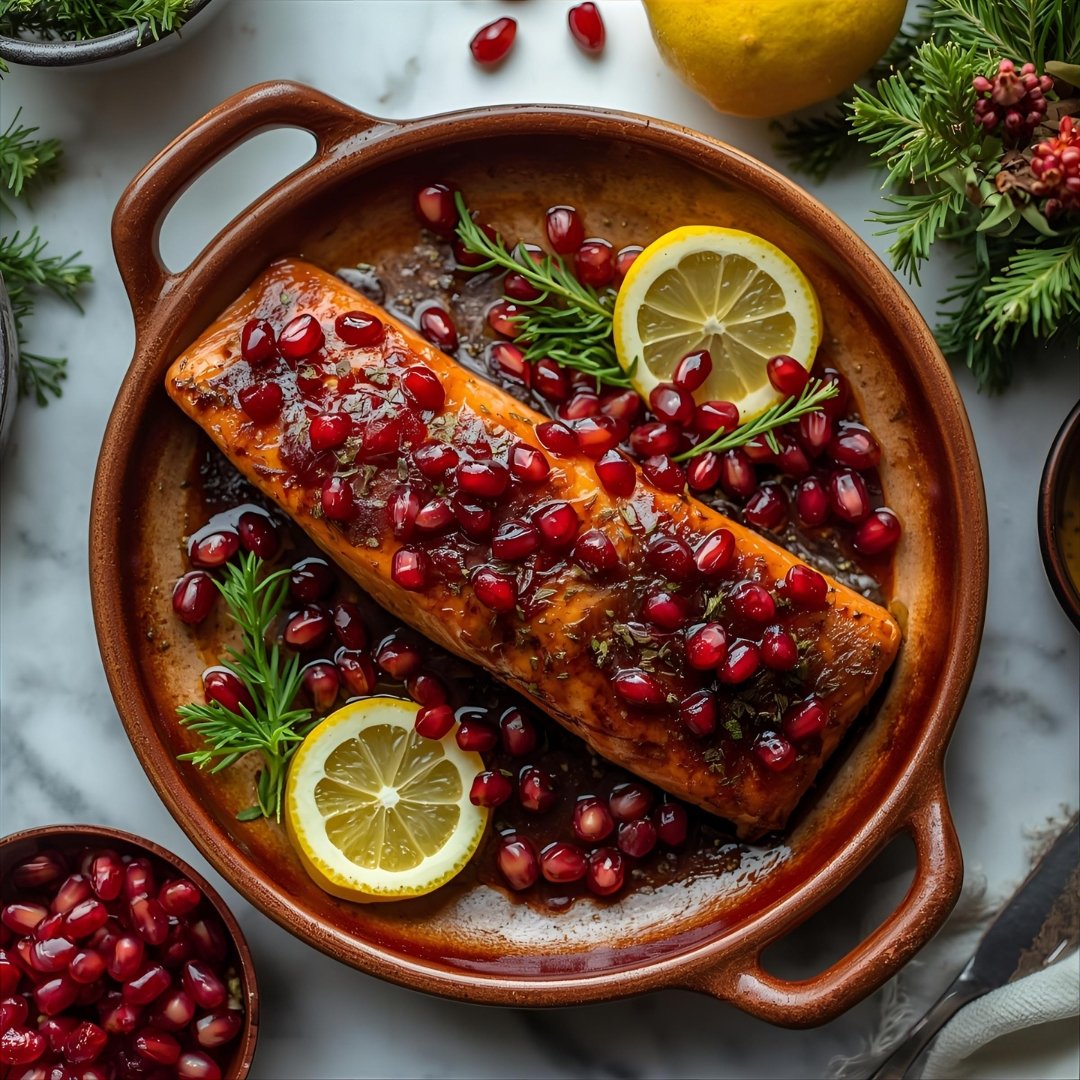
Salmon is close to a perfect keto food — zero carbohydrate, 34 grams of protein in a serving, and enough fat that you don’t need to add much. What usually ruins it is what goes on top: teriyaki, honey glaze, maple, a breadcrumb crust, rice on the side.
This one keeps the drama and skips all that. A whole fillet, baked at 400°F, glazed twice with pomegranate molasses, olive oil, garlic and a half teaspoon of cinnamon that does more work than it sounds like it should.
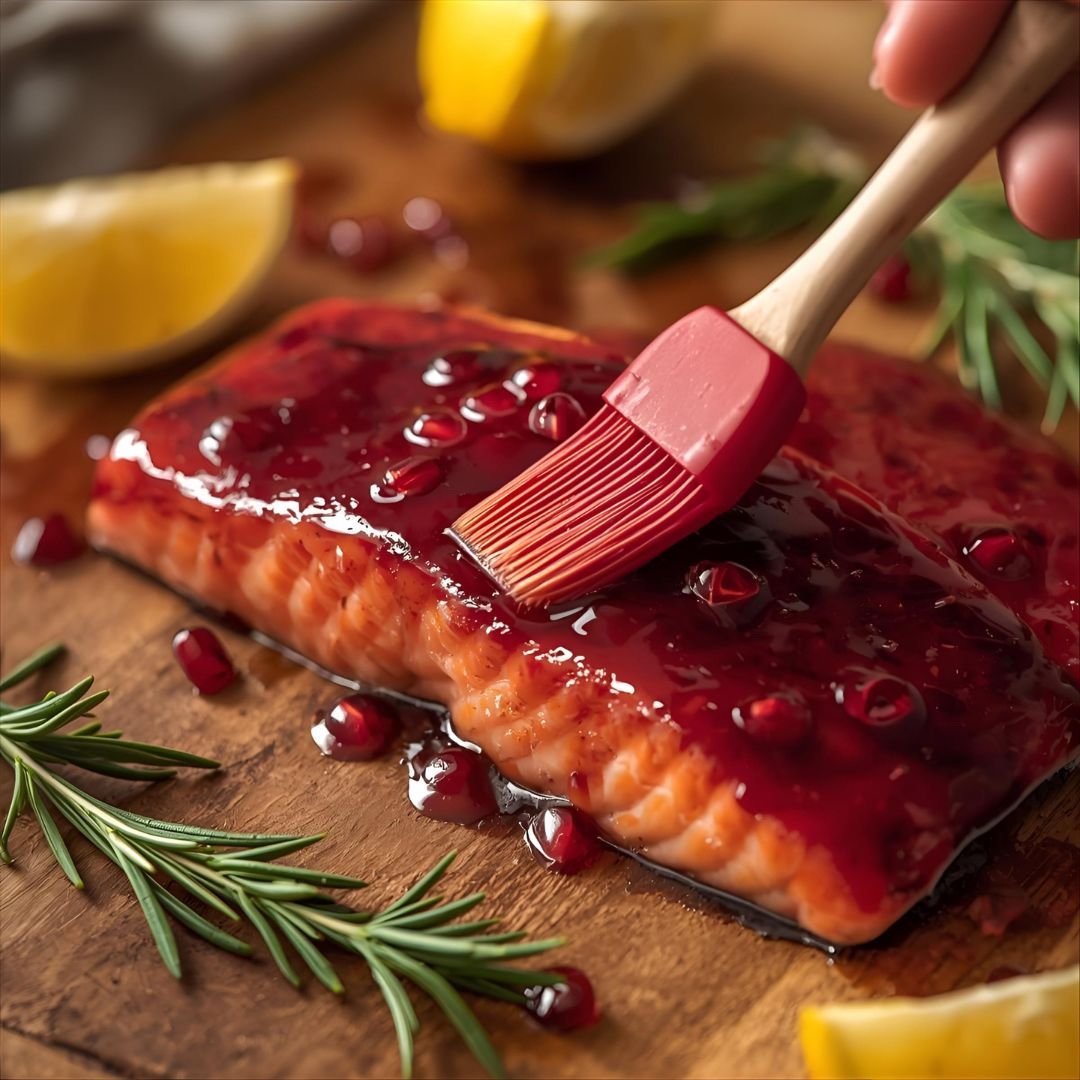
“Glaze once before it goes in, once the moment it comes out. That second brush on hot fish is where the gloss comes from.”
Thirty minutes, one tray, and it looks like a centrepiece. Below: the recipe, a doneness chart by thickness, and honest numbers on the glaze.
The Recipe
Keto Baked Salmon with Pomegranate Glaze
Serves 4–6 · Plan 5–6 oz of salmon per person
For the Salmon
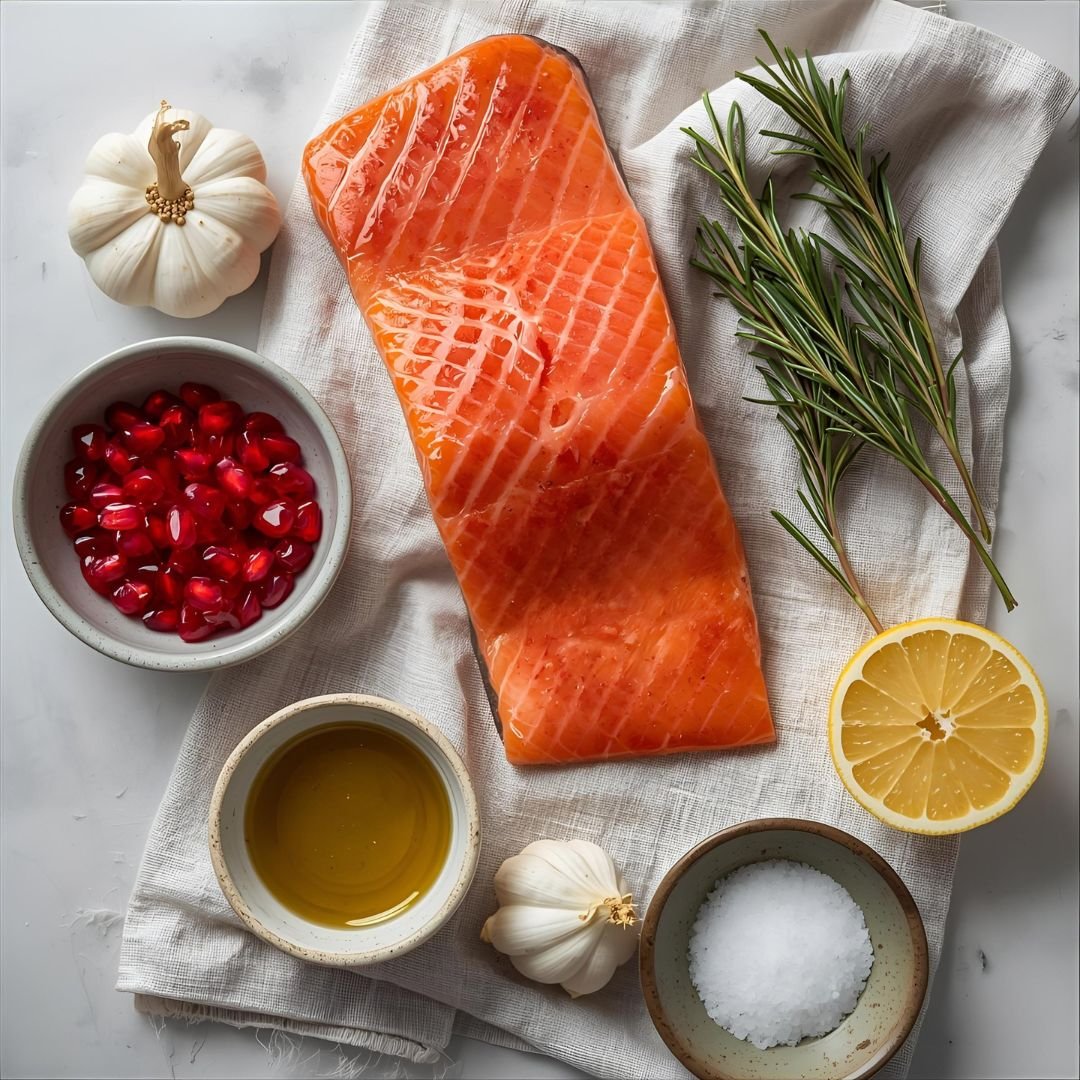
- 1 large whole salmon fillet, 1.5–2 lbs, skin-on, pin bones removed — centre-cut for even thickness
- 2 tbsp extra virgin olive oil
- 1 tsp sea salt · ½ tsp black pepper · ½ tsp garlic powder
For the Pomegranate Glaze
- ⅓ cup pomegranate molasses
- 2 tbsp extra virgin olive oil
- 1 tbsp fresh lemon juice
- 2 cloves garlic, minced
- ½ tsp ground cinnamon — warmth and depth, not sweetness
- Pinch of sea salt · pinch of red pepper flakes (optional)
For the Garnish
- Seeds from 1 large pomegranate (¾–1 cup arils)
- ¼ cup fresh mint, torn · ¼ cup parsley, chopped · 2 tbsp dill (optional)
- 2 tbsp toasted pine nuts or pistachios (optional)
- Lemon wedges for serving
Instructions
- Prep the salmon. Out of the fridge 15–20 minutes ahead — cold fish cooks unevenly. Run your fingers along the fillet to find pin bones and remove them with tweezers. Pat thoroughly dry; moisture prevents browning and stops the glaze sticking.
- Preheat and make the glaze. 400°F, rack in the centre. Line a rimmed sheet with parchment and brush with oil. Whisk all glaze ingredients together — it should taste tart, slightly sweet, warmly spiced. Reserve half for finishing.
- Season and glaze. Salmon skin-side down. Olive oil rubbed over the flesh, then salt, pepper and garlic powder. Brush half the glaze on generously and let it sit 2–3 minutes to absorb.
- Bake 12–18 minutes depending on thickness — see the chart below. Salmon goes from perfect to dry very quickly. When in doubt, pull it early.
- Glaze a second time. Immediately brush the remaining glaze over the hot fish. The residual heat sets it into a glossy, lightly caramelised finish you cannot get from one glazing. Rest 2–3 minutes.
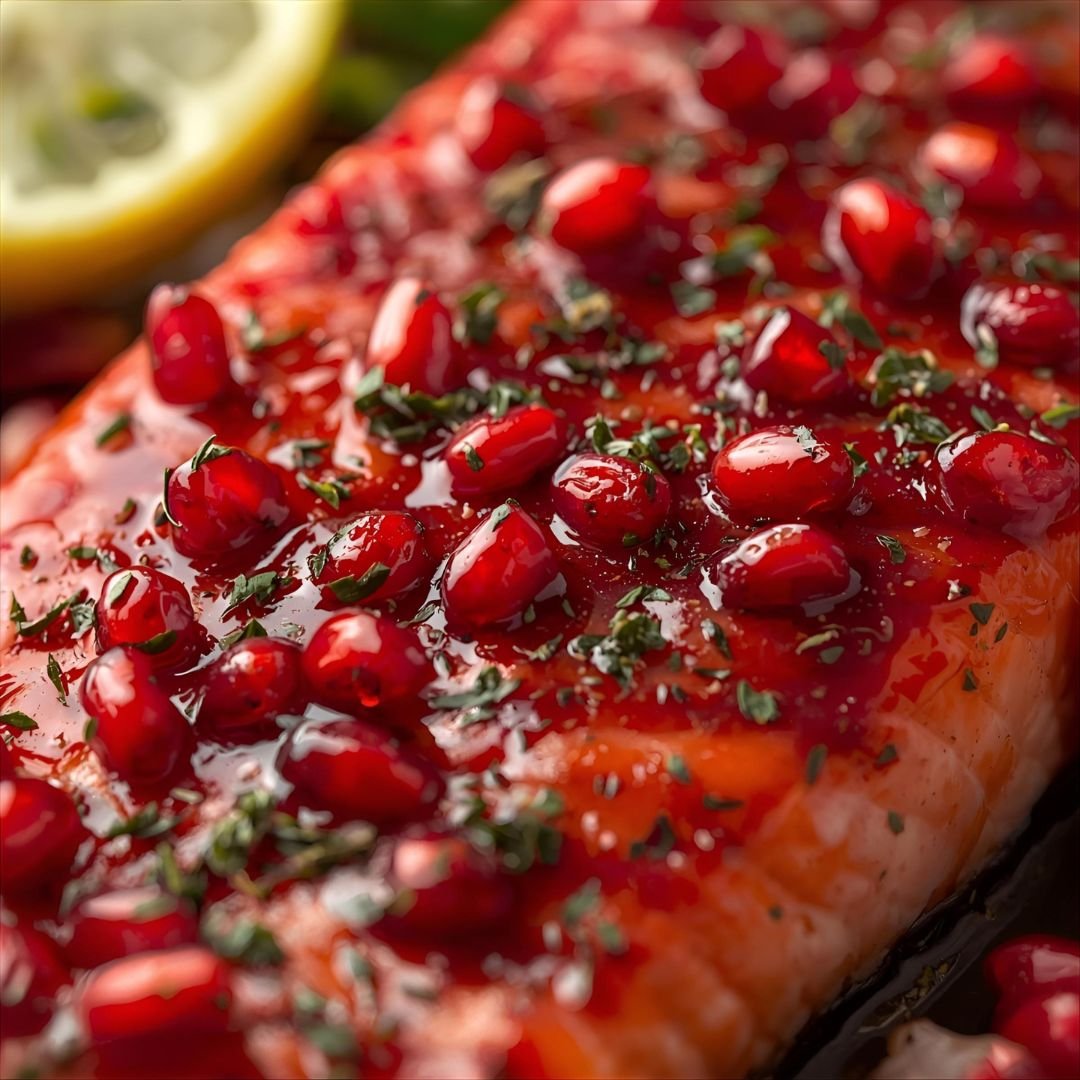
- Garnish and serve. Transfer with a large fish spatula. Scatter the arils generously, over and around — let some spill onto the platter. Torn mint, parsley, dill, then the nuts. Lemon wedges. Serve immediately.
Nutrition Per 6oz Serving
| Calories | Protein | Fat | Total Carbs | Fibre | Net Carbs |
|---|---|---|---|---|---|
| 320–350 | 34–38g | 16–20g | 8–10g | 1–2g | 7–8g |
Free download
More fish, more olive oil, less thinking
Grab the free 7-Day Greek Keto Mediterranean Meal Plan — 28 recipes built around fish, vegetables and olive oil, with a shopping list.
Prefer to look first? See what’s inside the meal plan →
How Long to Bake Salmon
Twelve to eighteen minutes at 400°F — and it depends on thickness, not weight. That’s the part most recipes get wrong. A two-pound fillet that’s thin and wide cooks faster than a one-pound piece cut thick.
Measure the thickest part and work from that. A whole side tapers, so the thin end will always finish first — which is fine, because there’s usually someone at the table who prefers it well done.
| Thickness | Bake time at 400°F | Pull at | Result |
|---|---|---|---|
| ¾ inch | 12–14 min | 125–130°F | Medium — slightly translucent centre, very moist |
| 1 inch | 14–16 min | 130–135°F | Medium — opaque, still moist |
| 1½ inch + | 16–18 min | 135–140°F | Medium-well — fully opaque, still juicy |
| Individual 6oz fillets | 10–12 min | 130°F | Start checking early — they cook fast |
Pull it about 5°F below your target. Salmon keeps cooking after it leaves the oven, and the window between perfect and dry is narrower than with any meat. The USDA recommends 145°F for safety; that produces noticeably drier fish, and most cooks and chefs work below it deliberately. Your call.
At other temperatures
- 350°F — 15–20 minutes. Gentler and more forgiving, but you lose the glaze caramelisation, which is the point of this recipe
- 425°F — 10–12 minutes. Faster, better browning, but the pomegranate glaze can catch. Watch it
- Without a thermometer — press the thickest part with a fork and twist. It should flake while still looking slightly translucent right at the centre. Fully opaque means you’re already past medium
Is Salmon Keto?
Yes — it’s close to an ideal keto food. Plain salmon has zero carbohydrate, roughly 34–38g of protein per 6oz serving, and a high proportion of omega-3 fats. There isn’t much you need to add.
What takes a salmon dish out of keto range is almost always what goes on it. Teriyaki, honey glaze, maple, brown sugar rubs, breadcrumb crusts, a rice side. The fish was never the problem.
What the glaze costs
Being straight about it: pomegranate molasses is not keto on its own. It’s reduced pomegranate juice and carries roughly 10–12g of carbohydrate per tablespoon.
But a third of a cup spread across a fillet serving four to six people works out at around 7g net carbs per portion, which is what the nutrition figures account for. That’s a considered spend on a centrepiece dish, not an accident.
If you need it lower: halve the molasses and make up the volume with lemon juice and olive oil. You lose some depth and gloss but keep the character, and it drops to roughly 4g. For near-zero, skip the glaze entirely and finish with olive oil, lemon, garlic and herbs — a different dish, but a very good one.
Why this works for anti-inflammatory eating
- Omega-3s — salmon is among the best dietary sources of EPA and DHA
- Pomegranate polyphenols — punicalagins, concentrated in the molasses
- Olive oil — oleocanthal, in both the glaze and the finish
- Fresh herbs — mint, parsley and dill each carry their own compounds, and they’re not just decoration here
All About Pomegranate Molasses
It’s simply pomegranate juice reduced until thick and syrupy — no molasses involved despite the name. Tart, deep, faintly sweet, and a staple across Lebanon, Syria, Turkey and Iran.
Where to find it
- Middle Eastern grocers — cheapest and usually best
- Larger supermarkets, in the international aisle
- Check the label: it should say pomegranate juice, and ideally nothing else. Many brands add sugar or glucose syrup, which changes both the flavour and the carb count
Making your own
Simmer 4 cups of pure pomegranate juice with a tablespoon of lemon juice over medium-low heat until it reduces to about half a cup and coats a spoon — roughly an hour, and it doesn’t need watching closely. It keeps for months in the fridge.
Homemade comes out more tart than shop-bought, which suits this recipe. It also lets you control exactly what’s in it.
What to Serve With It
- Horiatiki — Greek village salad, no lettuce. The acid is exactly right against the glaze
- Roasted Mediterranean vegetables — courgette, aubergine, peppers, in the oven while the salmon rests
- Garlic sautéed spinach with lemon — five minutes, one pan
- Cauliflower rice with herbs and olive oil, to catch the glaze
- Shaved fennel salad — anise against pomegranate is a genuinely good combination
Wine
A Greek Assyrtiko or a dry Provence rosé. Both have enough acid to stand up to the glaze without competing with it.
Troubleshooting
| Problem | Cause | Fix |
|---|---|---|
| Glaze burned | Natural sugars caramelise fast; oven running hot, rack too high, or all the glaze applied before baking | Rack in the centre, glaze in two stages, tent loosely with foil if it darkens too early |
| Salmon dry | Overcooked — the window is narrow | Use a thermometer and pull 5°F early. Thin ends will always finish first on a whole side |
| Glaze slid off | Fish wasn’t dry enough | Pat thoroughly with paper towels before glazing. Moisture is the enemy of adhesion |
| White stuff on the surface | Albumin — protein pushed out by heat. Harmless, and a sign of cooking slightly hot or long | Lower the temperature or pull earlier. The garnish covers it anyway |
| Too tart | Homemade or unsweetened molasses | A little monk fruit sweetener in the glaze, or an extra drizzle of olive oil to round it |
Frequently Asked Questions
Is salmon keto?
Yes, and it’s close to an ideal keto food — zero carbohydrate, 34–38g of protein per 6oz serving, high in omega-3 fats. What takes a salmon dish out of keto range is almost always what goes on it: teriyaki, honey glaze, maple, breadcrumb crusts or a rice side. This recipe comes to 7–8g net carbs, all of it the pomegranate glaze.
How long do you bake salmon at 400°F?
Twelve to eighteen minutes, depending on thickness rather than weight. Three-quarter inch needs 12–14, one inch 14–16, an inch and a half or more 16–18. Measure the thickest part — a whole side tapers, and the thin end always finishes first.
What’s the internal temperature for cooked salmon?
Pull at 125–130°F for a slightly translucent centre, 130–135°F for opaque and moist, 135–140°F for medium-well. Pull about 5°F below target — it keeps cooking after it leaves the oven. The USDA recommends 145°F for safety, which produces noticeably drier fish.
Is pomegranate molasses keto?
Not on its own — it’s reduced pomegranate juice, roughly 10–12g of carbohydrate per tablespoon. But a third of a cup across a fillet serving four to six works out at around 7g per portion. If you need it lower, halve the molasses and make up the volume with lemon juice and olive oil.
Can I use individual fillets instead of one large piece?
Yes. Individual portions cook faster — start checking at 10–12 minutes for standard 6oz fillets. You lose the centrepiece presentation but gain easier serving and more glazed surface per portion, which some people prefer.
Can I make my own pomegranate molasses?
Yes. Simmer 4 cups of pure pomegranate juice with a tablespoon of lemon juice over medium-low heat until reduced to about half a cup and coating a spoon — roughly an hour. Keeps for months refrigerated, and comes out more tart than shop-bought, which suits this recipe.
Why did my glaze burn?
Pomegranate molasses caramelises fast. Usually the oven runs hot, the rack sits too high, or all the glaze went on before baking rather than half being reserved. Keep the rack central, glaze twice, and tent loosely with foil if the surface darkens too early.
Can I grill this instead of baking?
Yes, and it’s very good. Grill skin-side down over medium heat with the lid closed, 10–14 minutes depending on thickness, without turning. Glaze only in the last few minutes — over direct heat the sugars will burn well before the fish is done.
Is this recipe dairy-free?
Yes, entirely. No dairy in the salmon, the glaze or the garnish — the richness comes from olive oil and the fat in the fish itself.
Disclaimer: This article is for informational purposes only and is not medical advice. Nutritional information is approximate and varies with the brand of pomegranate molasses and the size of the fillet. Cook fish to a temperature you are comfortable with; the USDA recommends 145°F. If you have dietary restrictions, allergies, or health conditions, consult your healthcare provider before making dietary changes.